

Hospitality
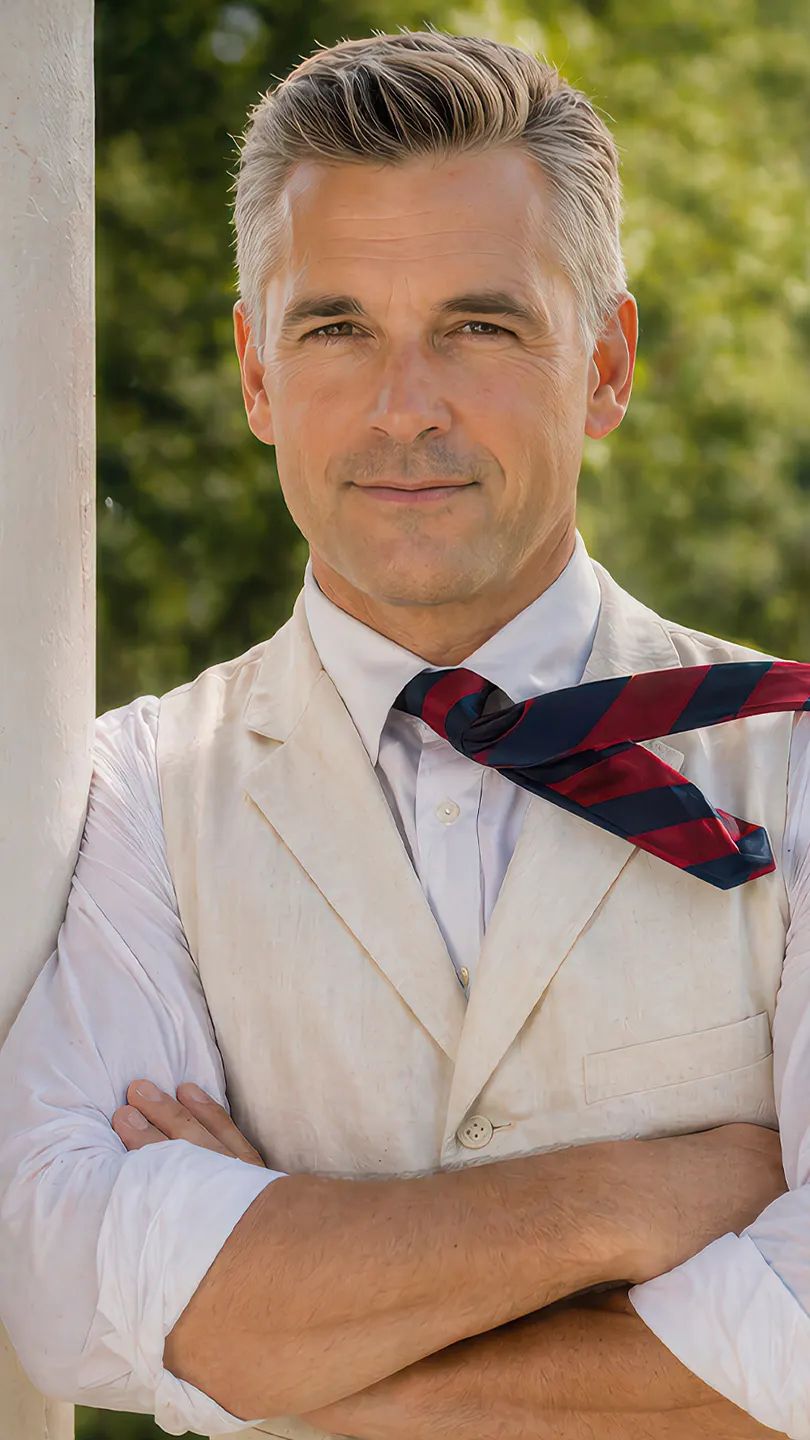
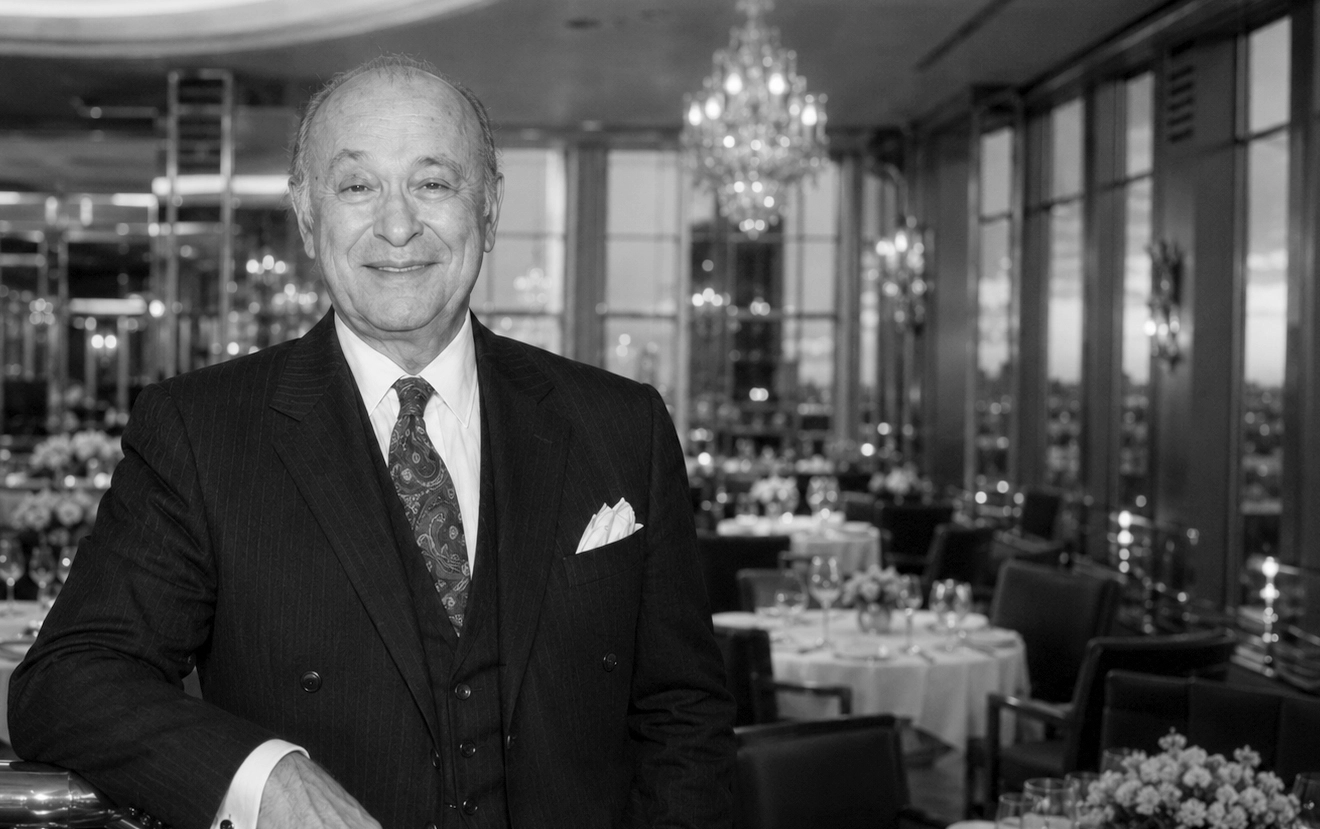
Joseph Baum
THE FOUR SEASONS
WINDOWS ON THE WORLD
THE RAINBOW ROOM
A life spent exploring how people
experience place, memory, and time—
...through preservation, hospitality, photography,
documentary film, television,
and the written word.

The work began in New York City, in the hospitality industry, at places like the Rainbow Room at Rockefeller Center, the Essex House, the Plaza Hotel, and Le Cirque. In 1992, he was featured on the cover of the Daily News Sunday Magazine describing the work as “an opportunity for character study.” It was work that required observation—watching people, listening, understanding how they moved through a room. That way of seeing was shaped early during his service in the United States Army as an Intelligence Analyst (96B), and later given structure through his training at Mason Gross School of the Arts at Rutgers University. That same attention turned into performance in theater, television, and film, with roles on The Guiding Light and Law & Order, and appearances in films such as A Beautiful Mind and The Thomas Crown Affair. From there, it moved outward into the building of places. He went on to build, own, and operate Skipperdee’s in Point Lookout, New York, and later designed, rebuilt, and operated The Food Mill, extending that work into the development of hospitality businesses for others. The work was no longer only about watching. It became the shaping of environments—
…how people gather, stay, and return.
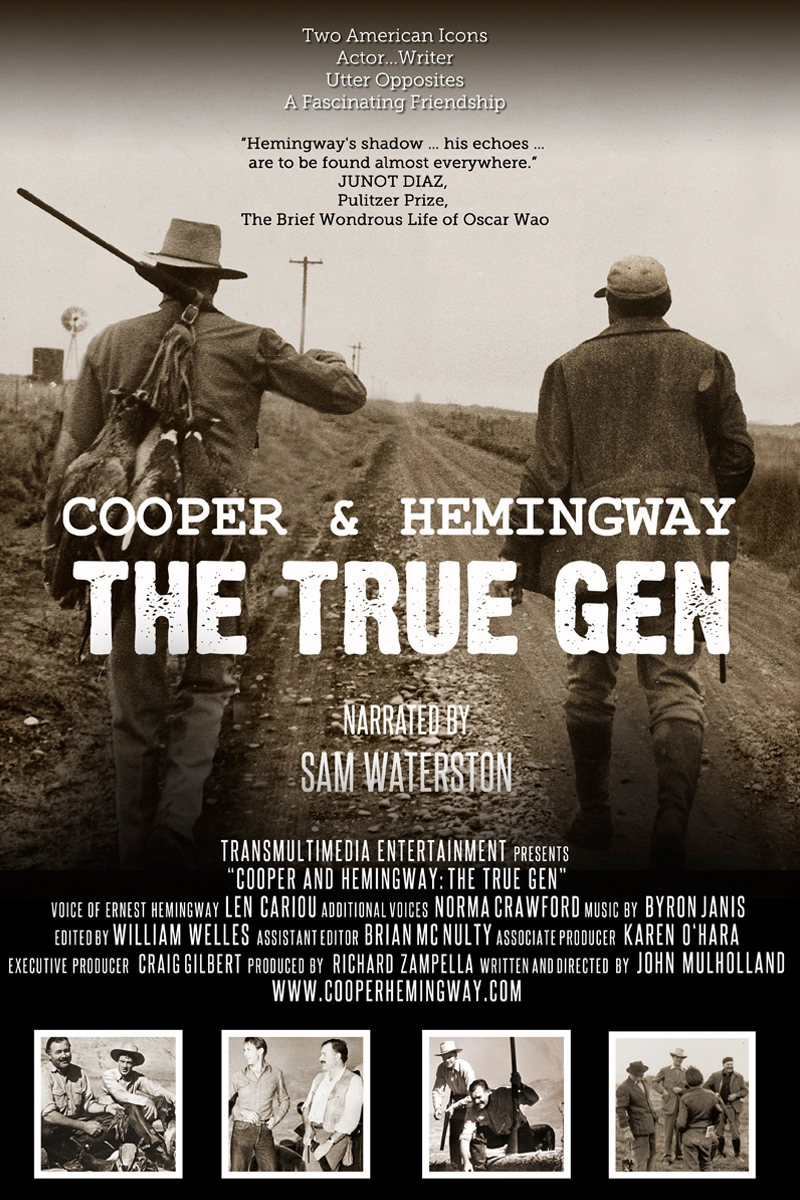
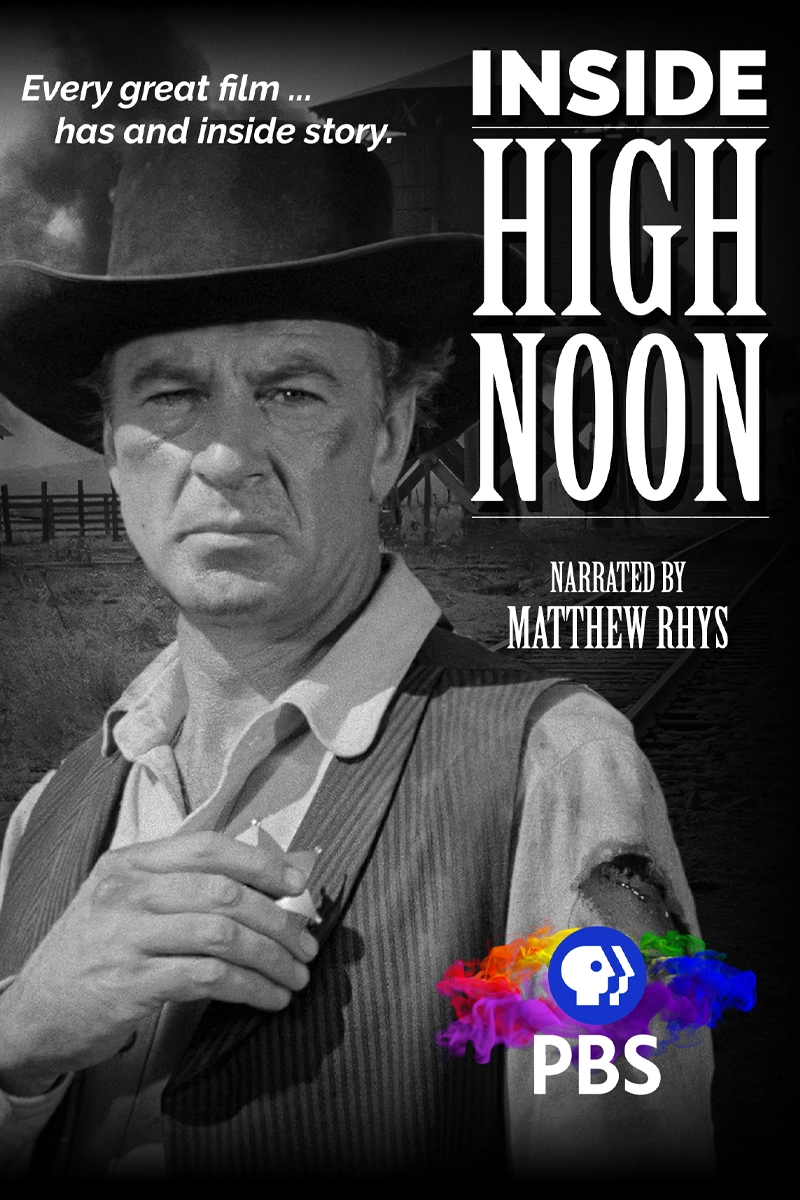
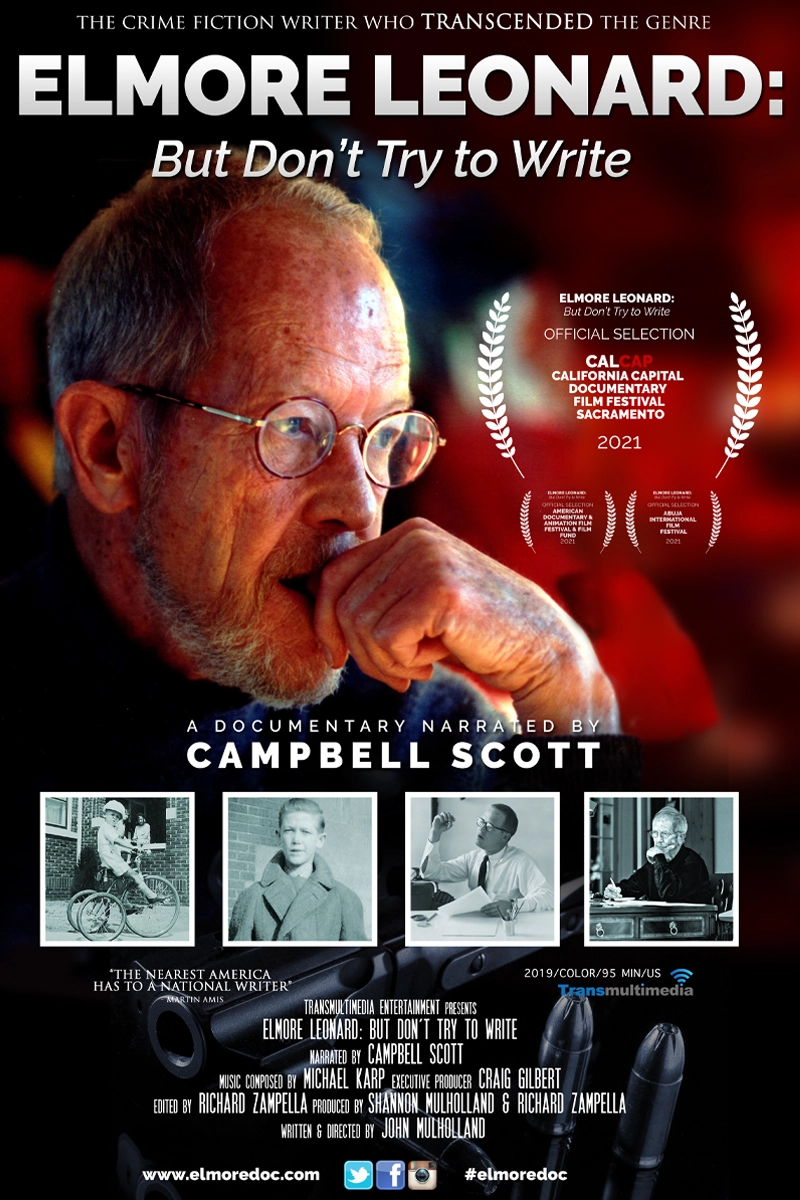
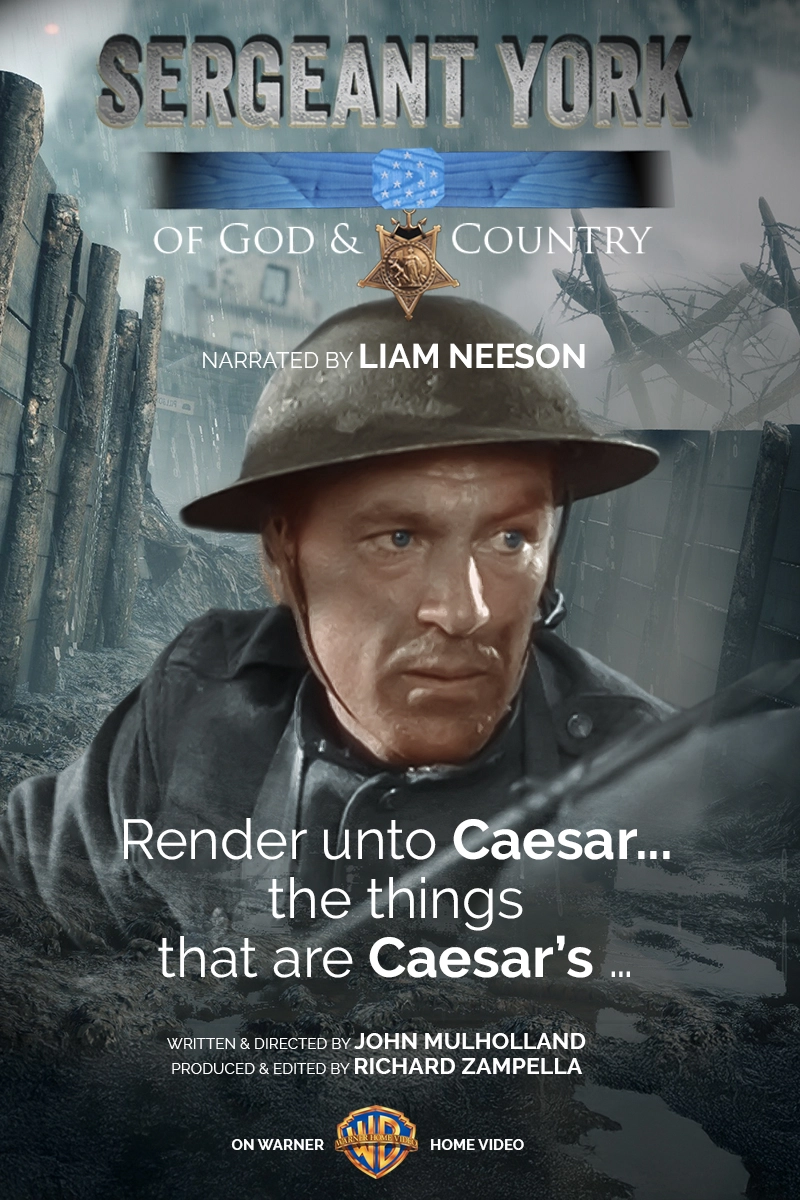
That same attention moved into documentary film, where projects on American cultural and historical subjects were produced and edited for PBS and international broadcast, including PBS America and Sky TV. Narration was provided by Sam Waterston, Matthew Rhys, Campbell Scott, and Liam Neeson across these works. Cooper & Hemingway: The True Gen was named a Critics’ Pick by The New York Times, followed by Sergeant York: Of God and Country, Elmore Leonard: But Don’t Try to Write, and Inside High Noon. Over time, that perspective—built through years of observation and attention—began to return toward a single place. What had once been about watching and recording began to turn inward, becoming something quieter and more sustained.
What remained.
It returned to one place—Idylease.
Idylease became the place
where that way of seeing returned to the ground.
Established in 1903 as a resort in the Highlands region of New Jersey, it later operated as a nursing home and medical practice under Dr. Arthur Zampella from 1954 to 1992.
In October 1988, it was designated the first local historic landmark by the Township of West Milford.
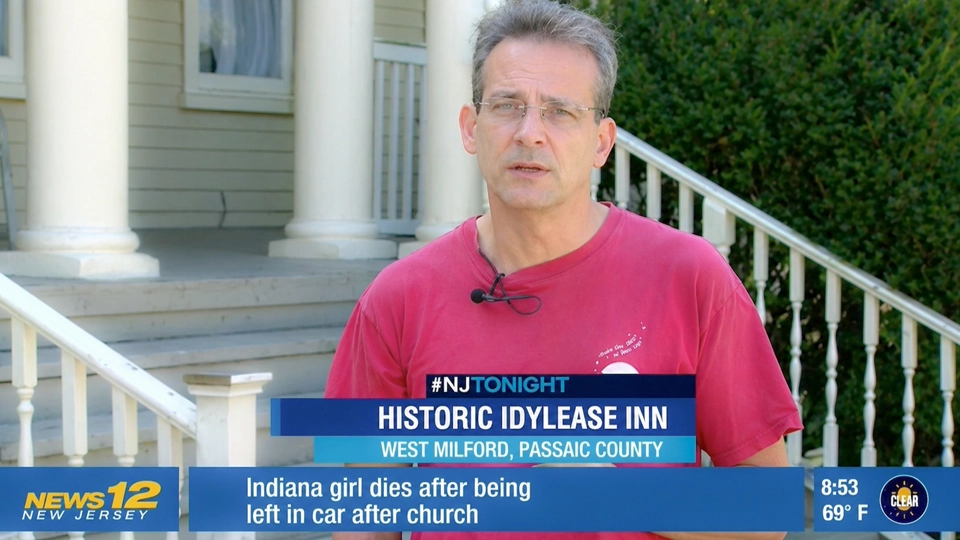
In April 2016, Richard Zampella returned and assumed stewardship of the property. Today, Idylease remains a landmark of roughly 100 acres, composed of the building, the tree farm, and the helistop — distinct uses held together by the same obligation to the land.
As a boy, Zampella knew Idylease simply as the place where he lived: the building on the hill, the long hallways, the sound of doors opening and closing, and his father moving from room to room in his white uniform. Only later did he understand that his father was not only going to work.
He was carrying responsibility for a place that would never truly be finished.
What remains is not only the building, but what it asks of those entrusted with it.
Places like Idylease are only owned for a little while. The work is to preserve them.
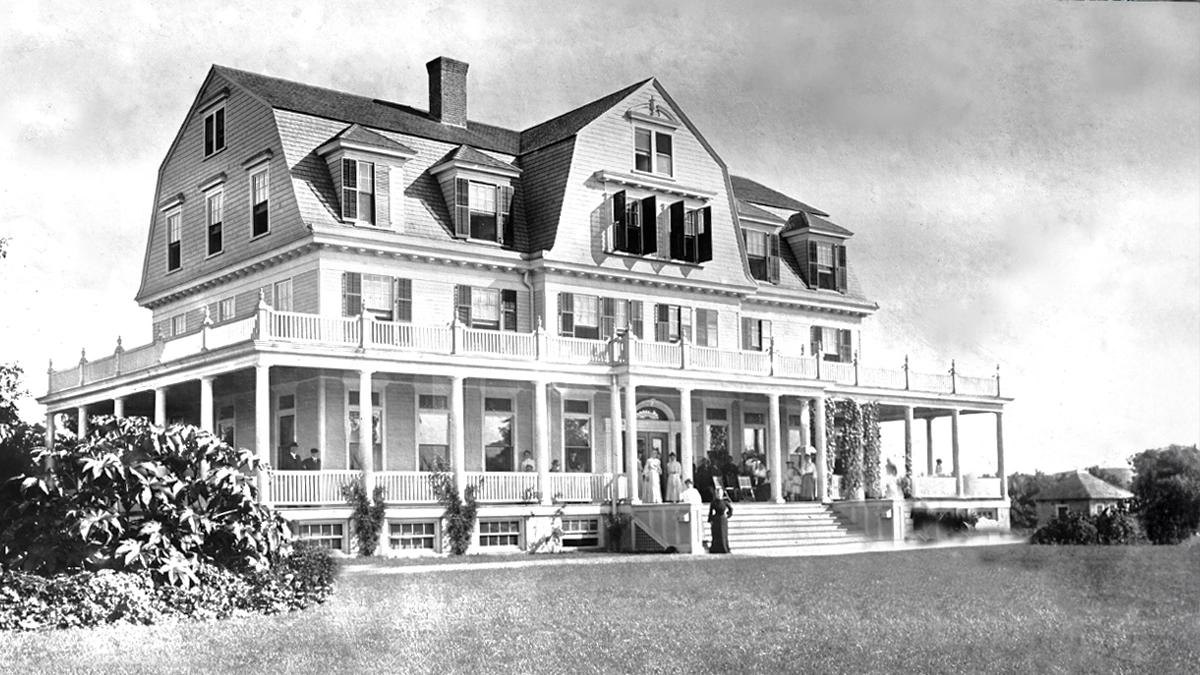
c. 1902
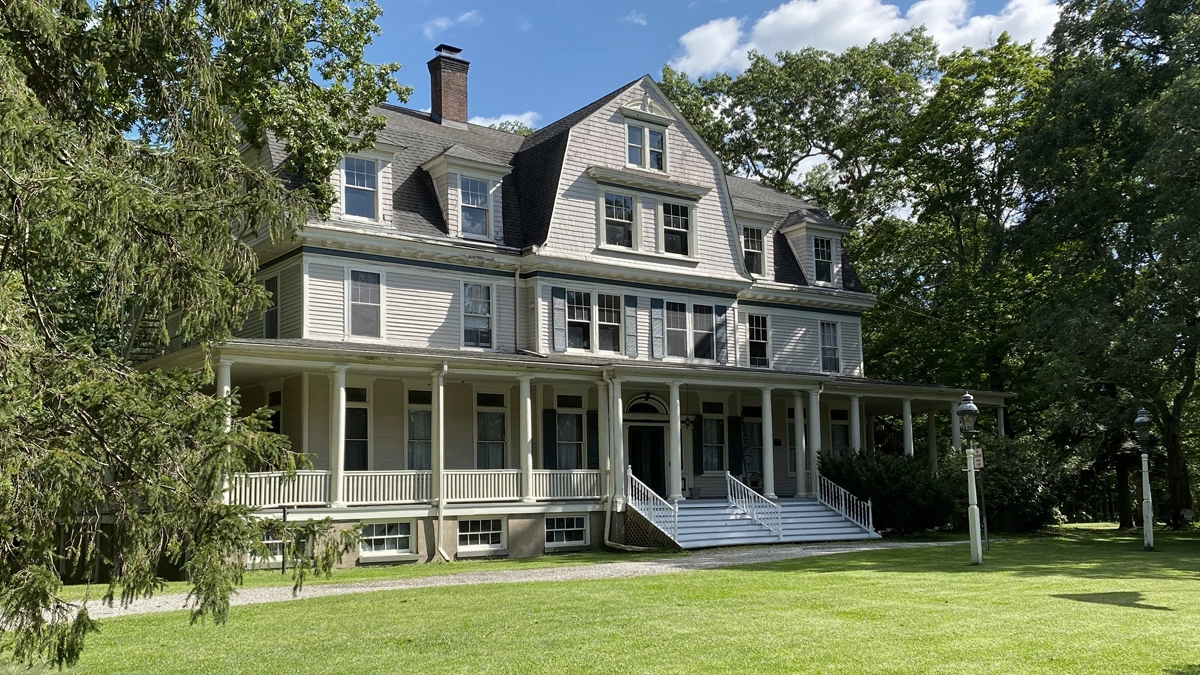
Present Day
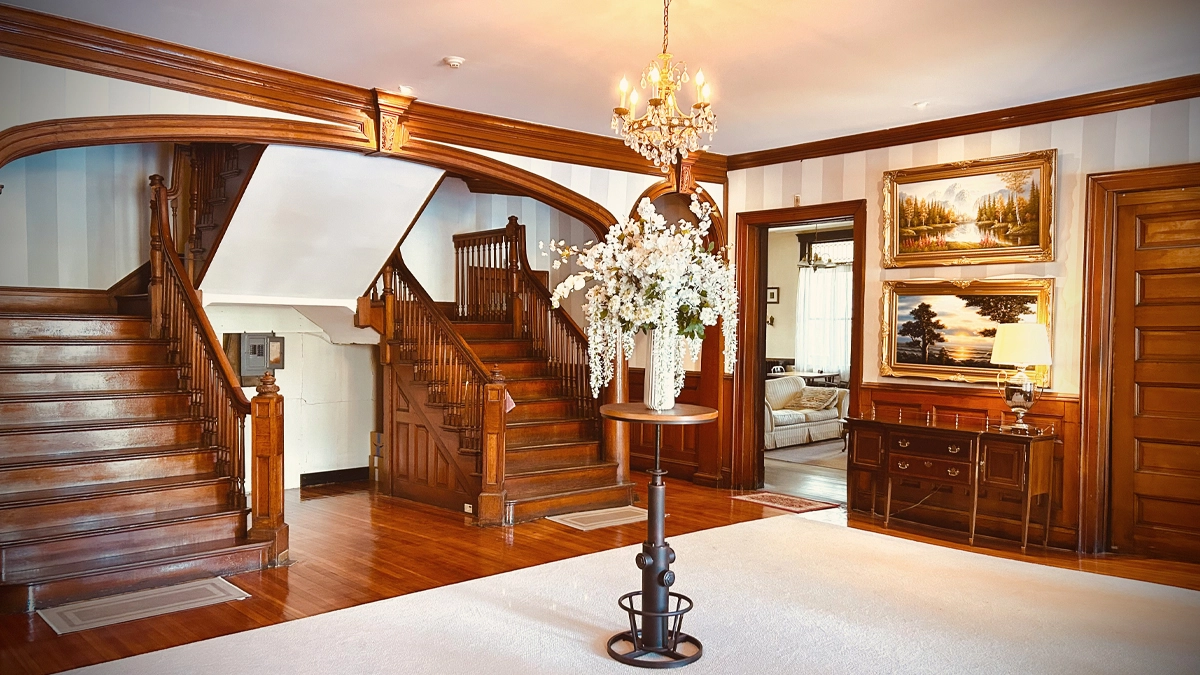
Idylease
The original structure, maintained through ongoing preservation and adaptive reuse.
Website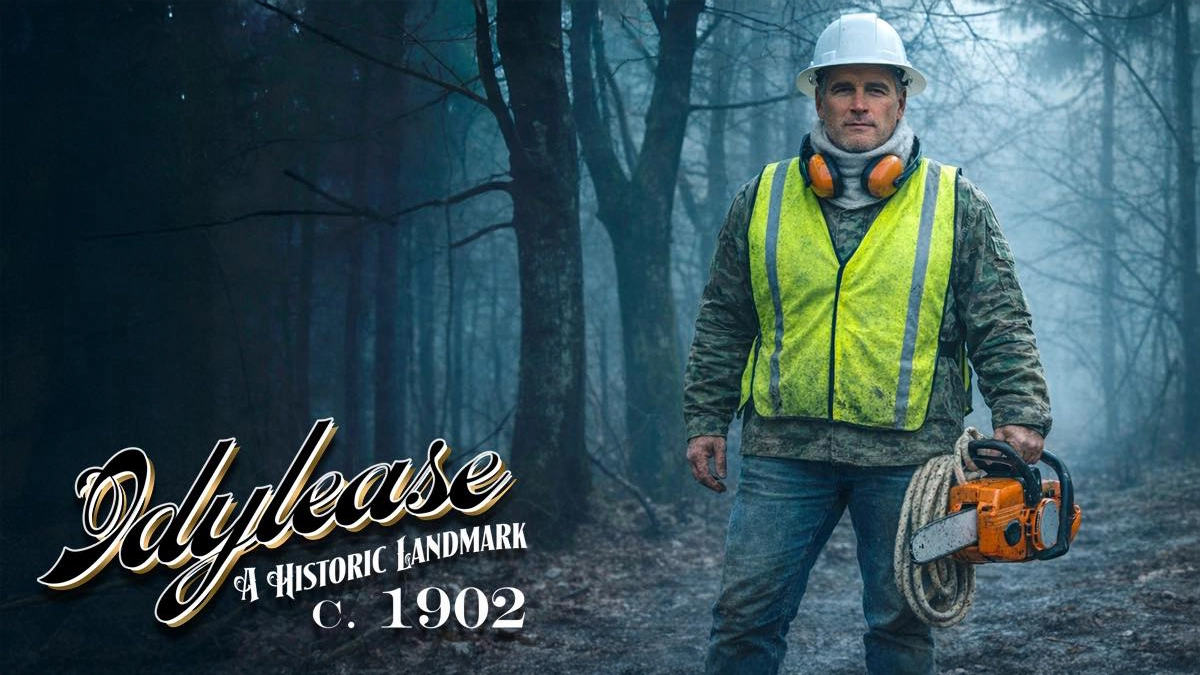

Idylease Airfield
Established in 1972, supporting regional emergency response and transport.
Website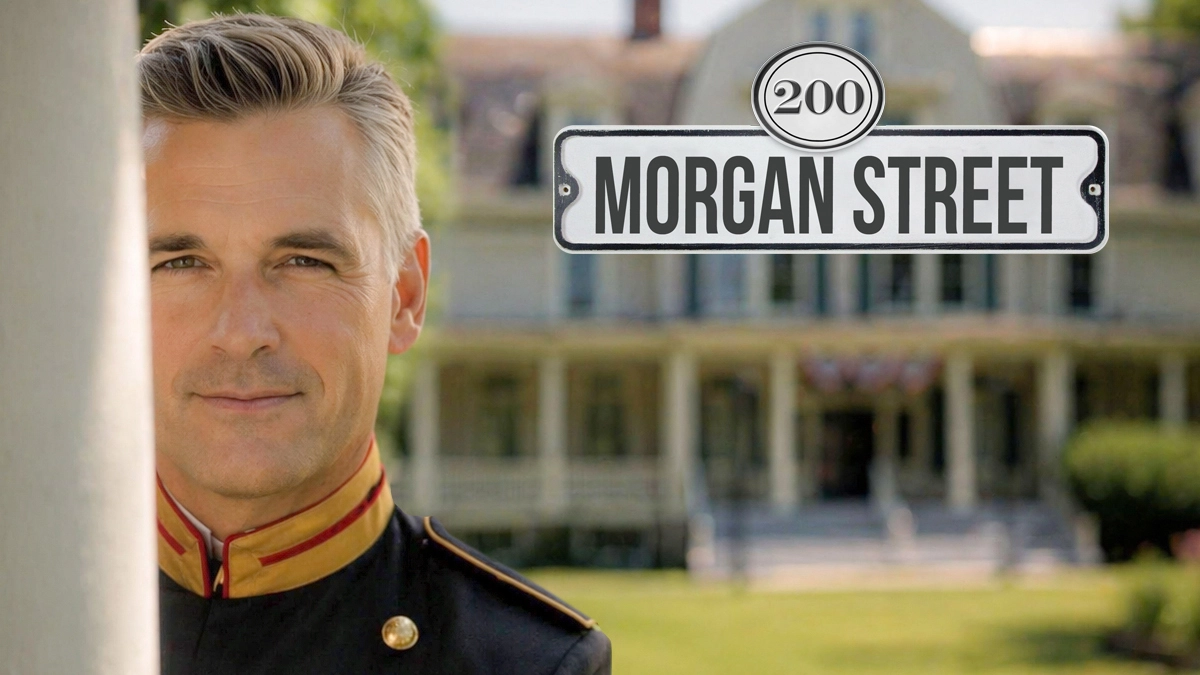
200 Morgan Street, LLC
Ongoing responsibility for the land and its uses, carried forward over time.
WebsitePreservation is not a finished condition. It is a continuing process of repair, weather, labor, and use. These images show the work required to keep Idylease standing, understood, and open to the people who return to it.
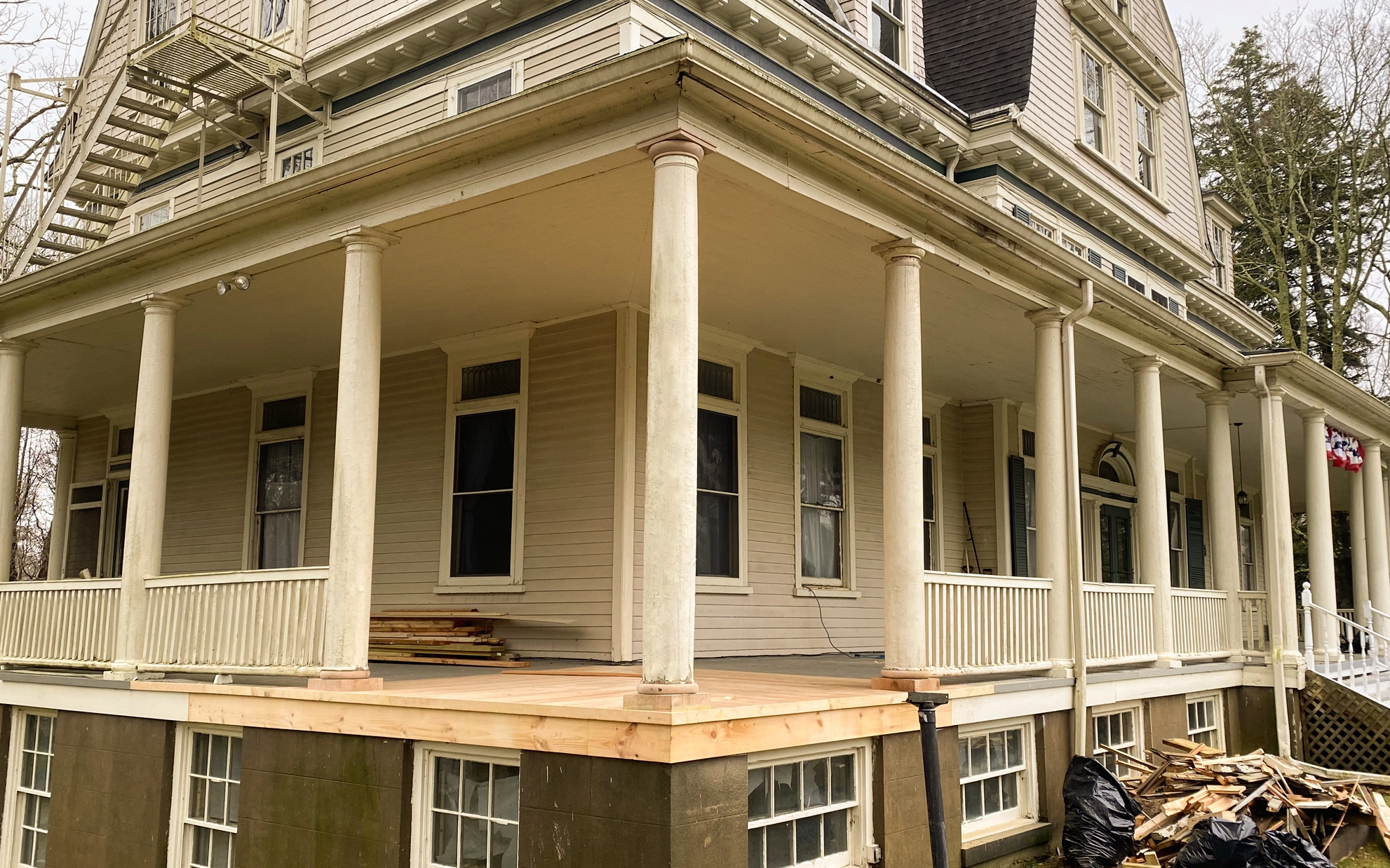
Repair
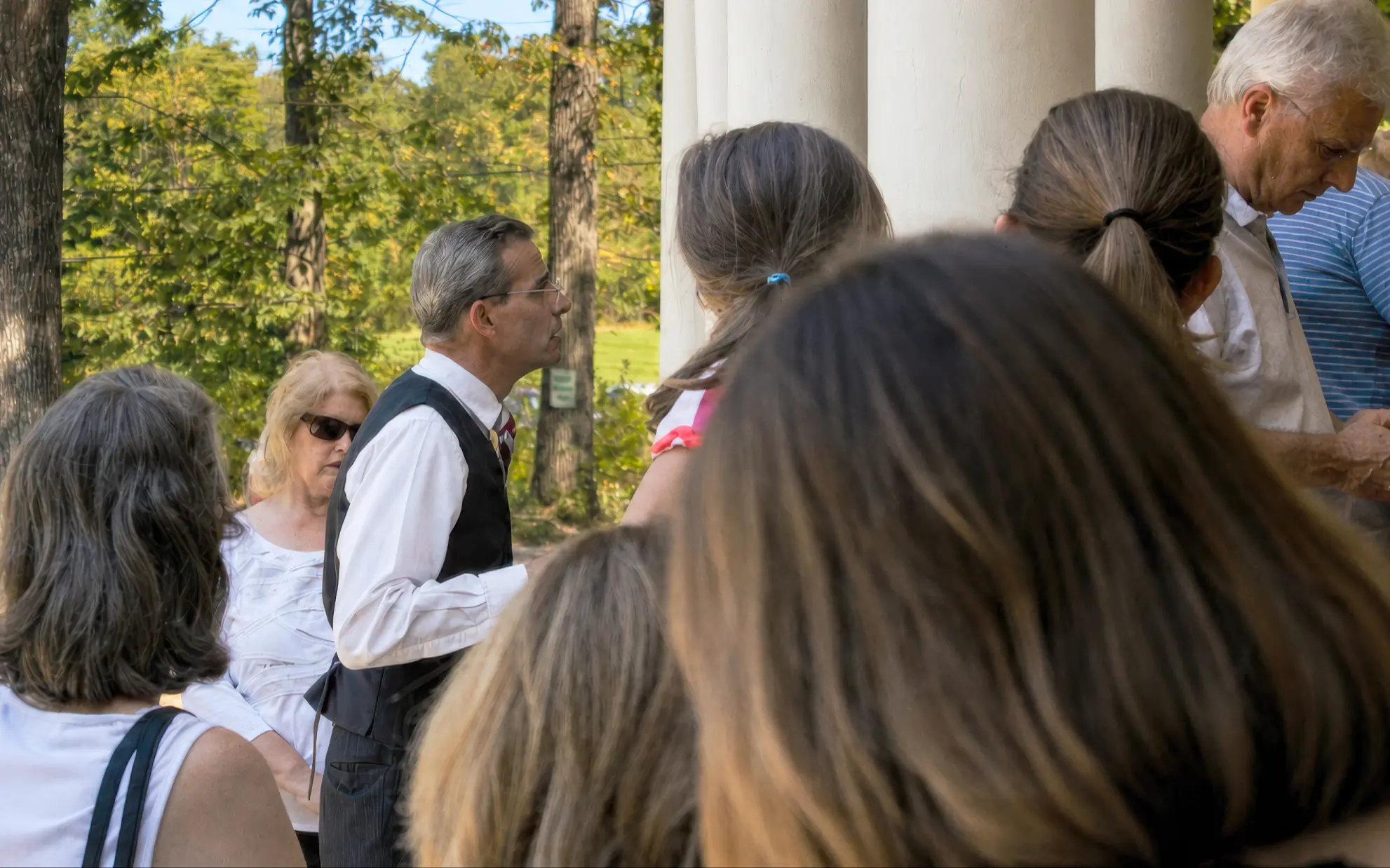
Gathering
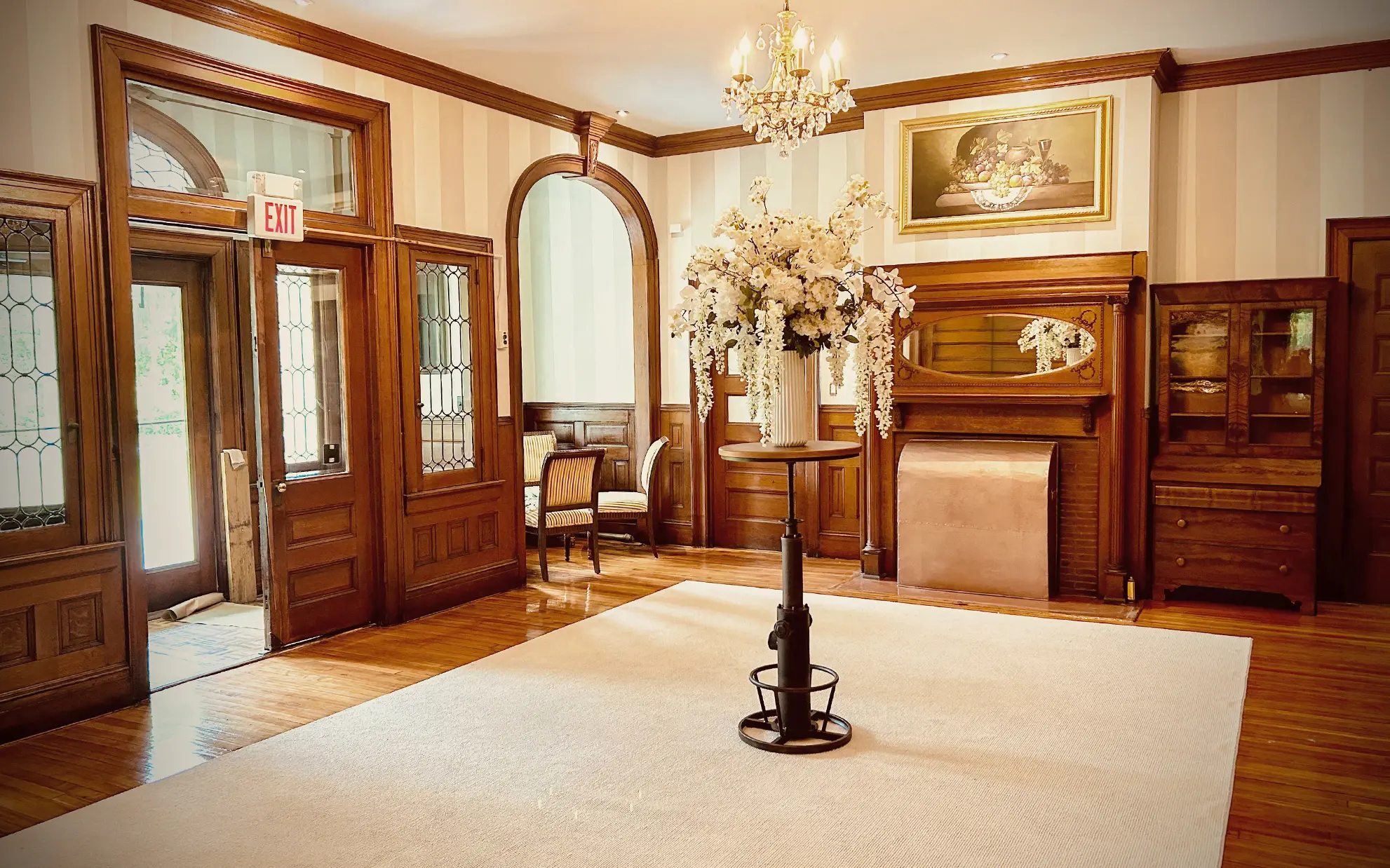
Work
Throughout his career, Richard Zampella has worked across hospitality, documentary film, historic preservation, photography, design, and writing. Over time, he began to understand that they had never been separate pursuits.
Memory, too, became part of that work. He came to see that stewardship could extend beyond buildings, landscapes, or creative projects to include the lives, intentions, and examples of people no longer able to speak for themselves. To see them honestly was not to idealize the past, but to honor what he learned from them with care, grace, and humility.
Each endeavor began with the same responsibility: to take something of importance and impart through it the knowledge, experience, and understanding accumulated over years of careful observation.
Much of that understanding grew from working relationships with individuals whose own lives reflected a profound pride of place. Their philosophy was shaped not solely through academia, but refined through years of practice.
THE FOUR SEASONS
WINDOWS ON THE WORLD
THE RAINBOW ROOM
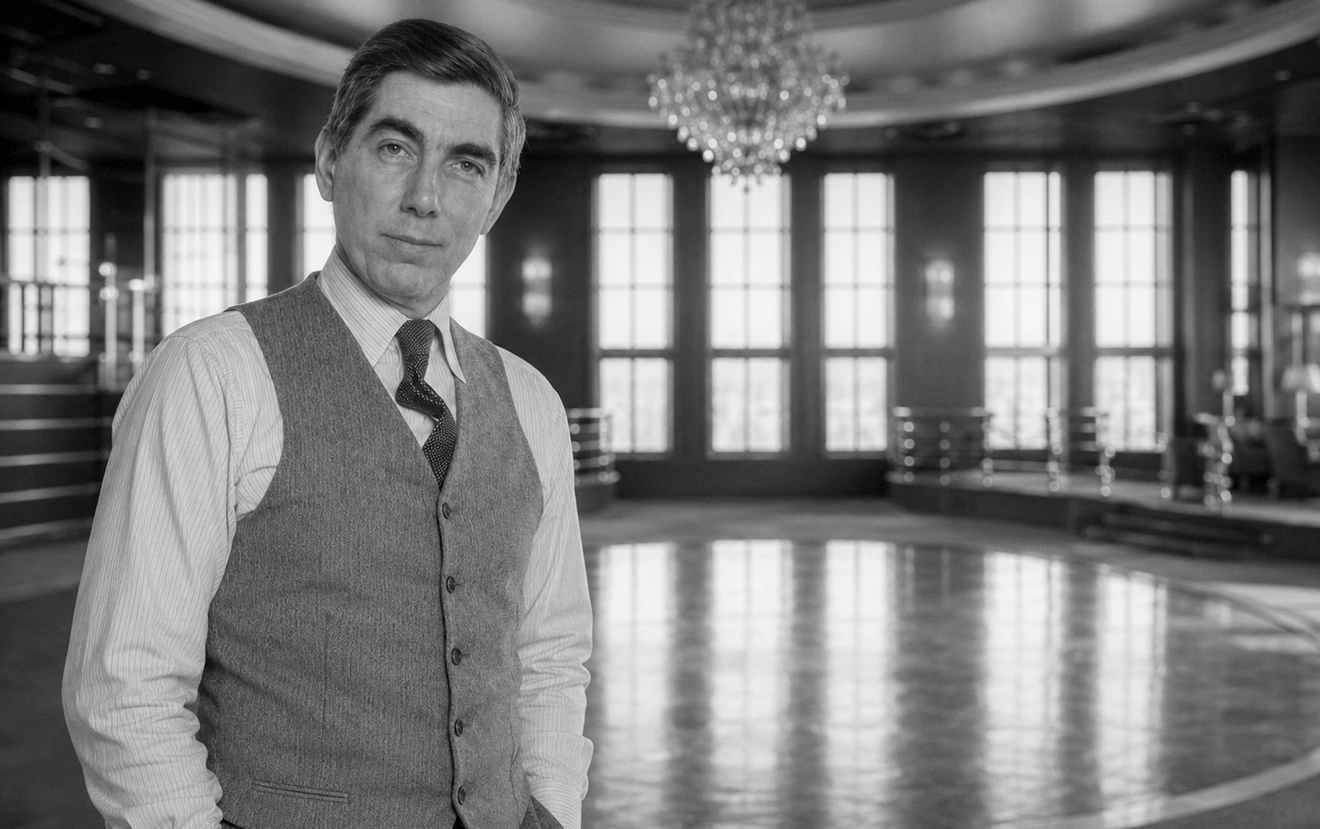
THE RAINBOW ROOM
RADIO CITY MUSIC HALL
NEW AMSTERDAM THEATRE
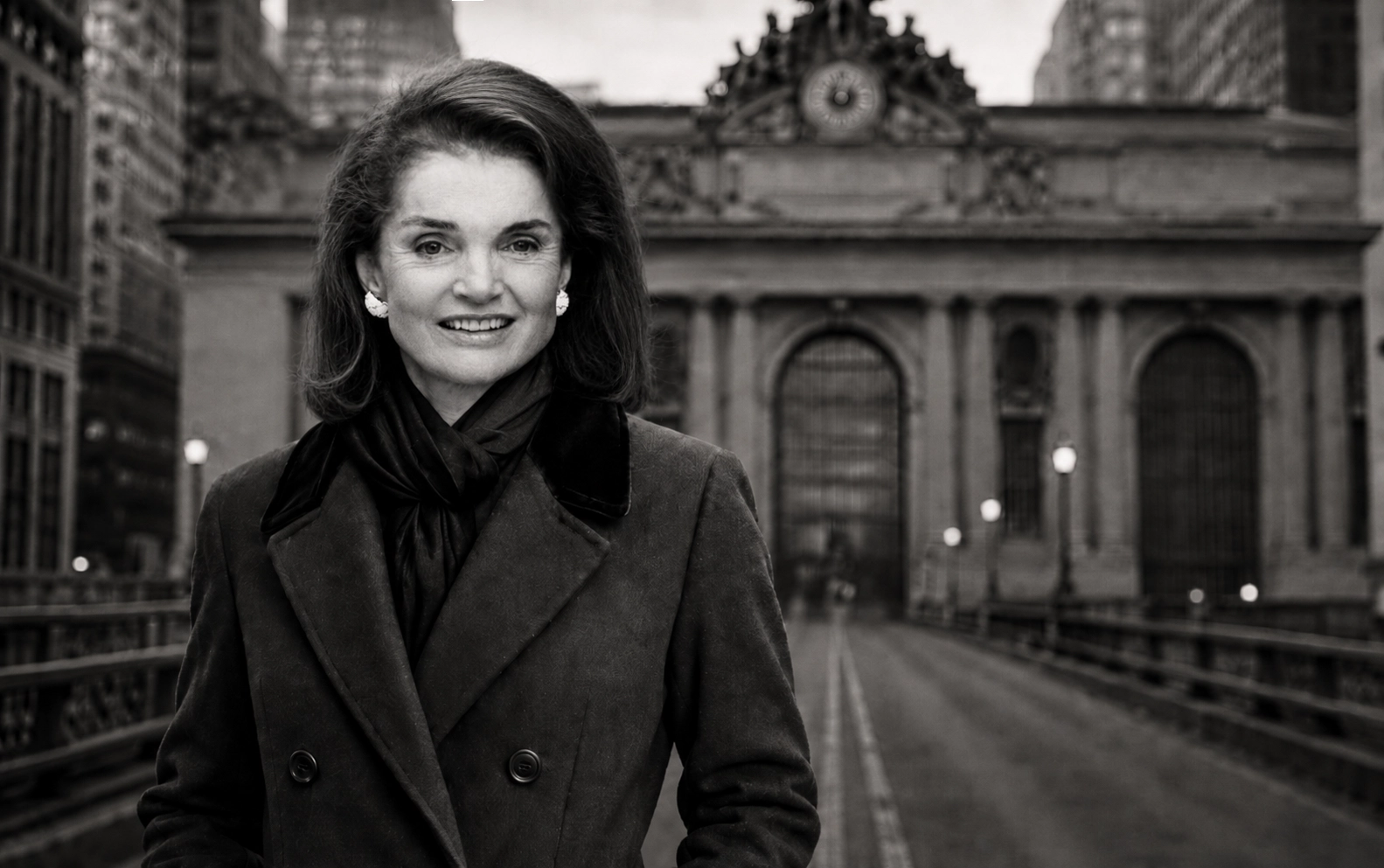
THE WHITE HOUSE RESTORATION
GRAND CENTRAL TERMINAL
LAYFAYETTE PARK
They taught him that preservation was never simply the recreation of what once existed. Places continue to acquire meaning through time and use. The work is not to return buildings to their original condition, but to recognize what gives a place its enduring character and carry it forward.
History belongs there too. It is more than the recording of events or the preservation of artifacts. It is an ongoing dialogue between past and present, requiring us to observe carefully, interpret honestly, and understand what previous generations have left in our care.
It asks that we tell it honestly, even if the truth is complicated, inconvenient, or uncomfortable.
Otherwise we are not preserving history at all.
We are preserving only a distorted version of it.
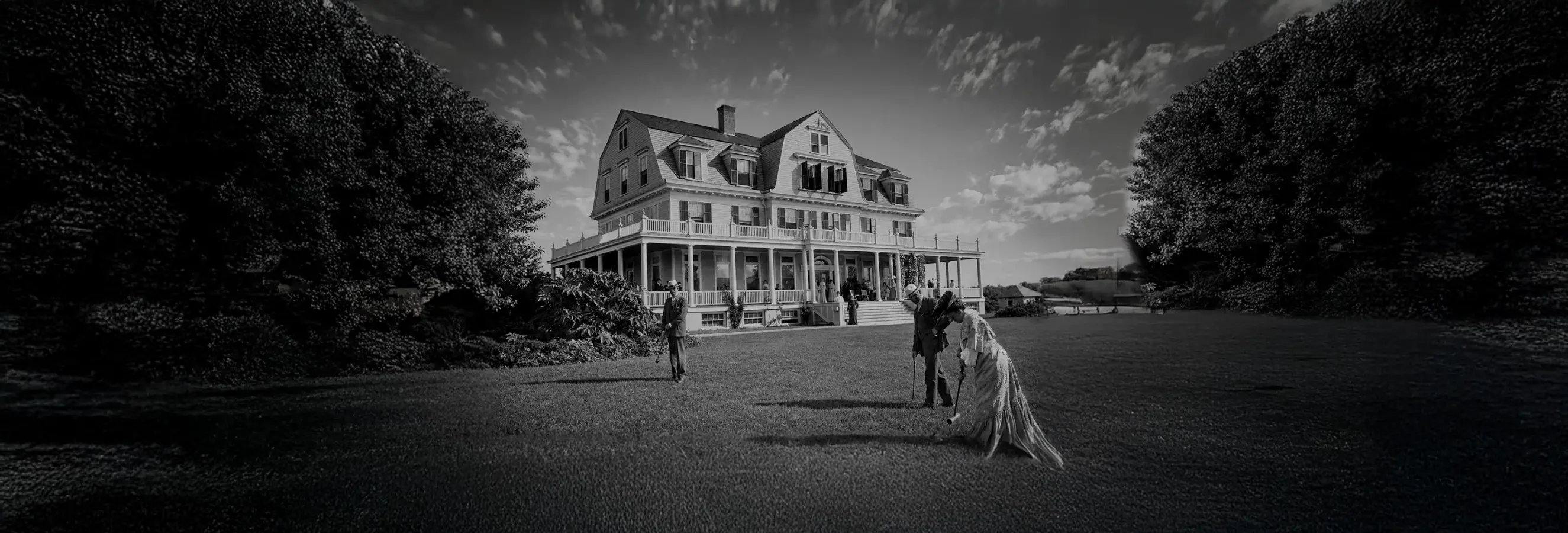
History is not merely the preservation of what happened. It is the moral act of making the past answerable to truth, so that what has been entrusted to us is not lost, re-written, or abandoned.
Richard Zampella
InSession Film Interview, 2026
It took time to understand what the work meant.
Not as a record, but as a way of seeing it more clearly.
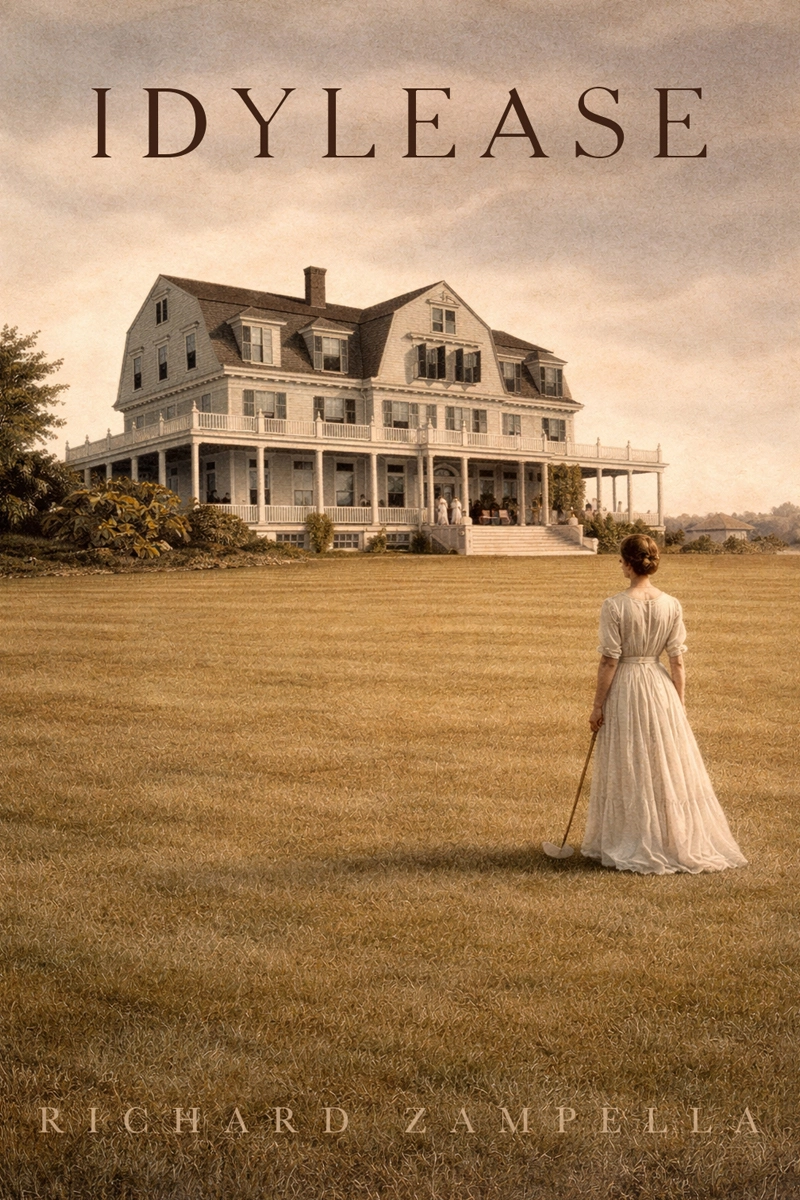
Hidden in the forests of the New Jersey Highlands stands a building that has quietly witnessed more than a century of American life. Idylease began in 1902 as a resort hotel, welcoming city dwellers who came seeking fresh mountain air and the promise of restorative rest. It has been a place where people came because something in their lives required care, patience, and time. Through each transformation the structure endured, carrying with it the stories of the people who passed through its doors.
For Richard Zampella, Idylease was never simply a historic building. It was the landscape of childhood, the place where he watched his father, a physician who believed deeply in dignity and care, create a small community within its walls.
As a young man, Zampella left those woods behind, moving first to Jersey City and then to Manhattan, where he spent years working in some of New York’s most storied institutions, including the Rainbow Room, Le Cirque, and The Plaza Hotel. His life intersected with actors, musicians, and cultural figures whose paths briefly crossed his own.
This is not a chronological memoir, but a reflection on a life spent crossing the long distance between where a person begins and what eventually depends on them. Through stories that span generations, from immigrant beginnings and mid-century medicine to Hollywood and the forests his father worked to preserve, Zampella reflects about responsibility, perseverance, and the quiet work of taking care of something that will outlast us all.
There were years when that responsibility was tested, including a lawsuit that threatened to tear the property apart. But like the forest that grows slowly over decades, stewardship is not measured in single events, but in the decision to continue.
People see a house on the hill. They don’t see the field you have to cross to get there.
More than the history of a place, Idylease is a meditation on the ties that bind people to the landscapes that shape them. It is the story of how a life spent searching elsewhere can sometimes lead us back to the ground where everything first began.
It is not simply a chronicle. It is an exploration of time, memory, and stewardship, and the realization that sometimes a man spends his life taking care of a place, only to understand later that the place was taking care of him.
Some stories stay with us because they never quite become the past. These notes and essays return to the people, places and moments that have stayed with me for most of my life and helped shape who I am.
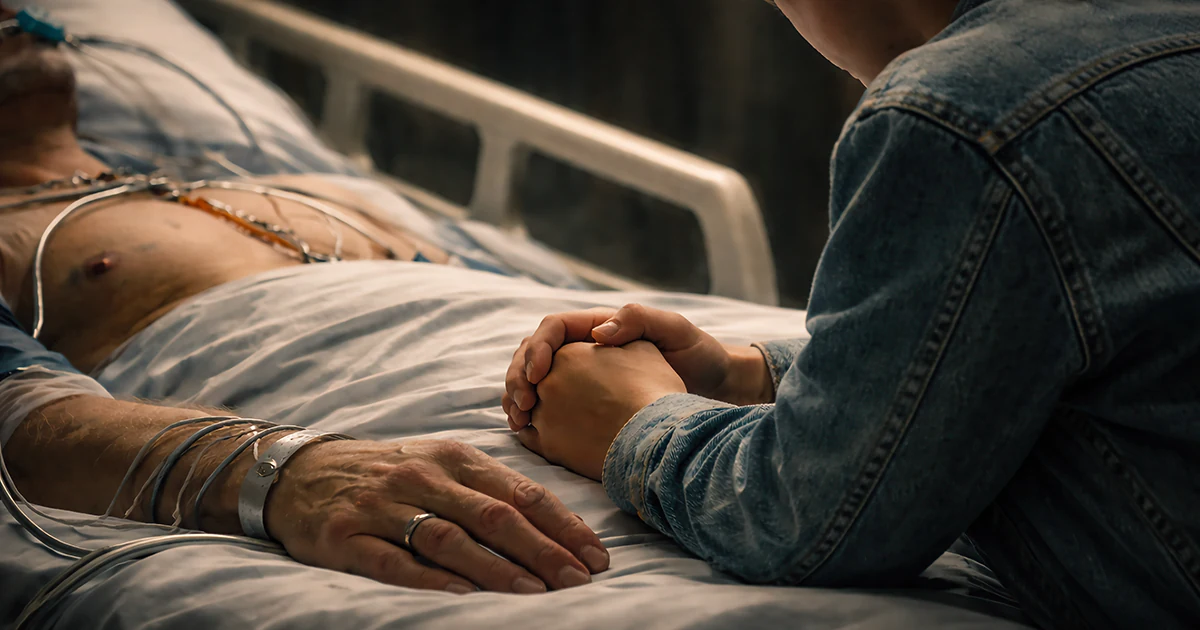
Memory / September 15, 2026
A morning in cardiac intensive care, an old scar, and the moment I understood that my father had survived something like this before.
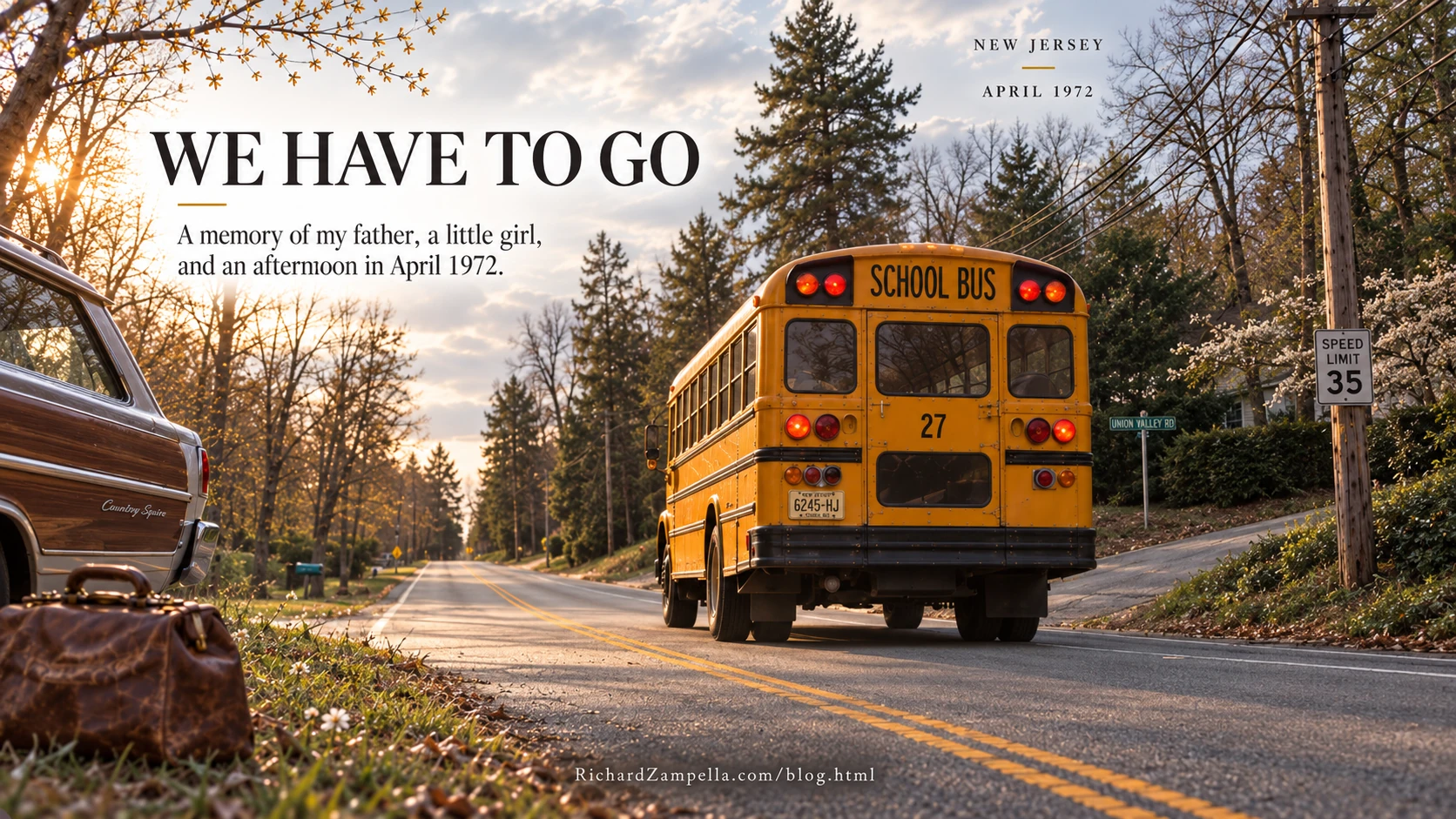
Memory / September 13, 2026
We Have to Go — A Memory from April 1972
At six years old, I went with my father to a school bus accident on Union Valley Road. Fifty-four years later, I learned the little girl’s name.

Memory / September 11, 2026
The People Who Hold Things Together
A remembrance of Father Mychal Judge, the years before September 11, and the people whose presence continues long after they are gone.
"In the great dining rooms of New York,
I learned to watch people,
to understand how they responded
to those spaces."
The work began with hospitality.
What he learned carried into the work—designing and building spaces for himself and others.
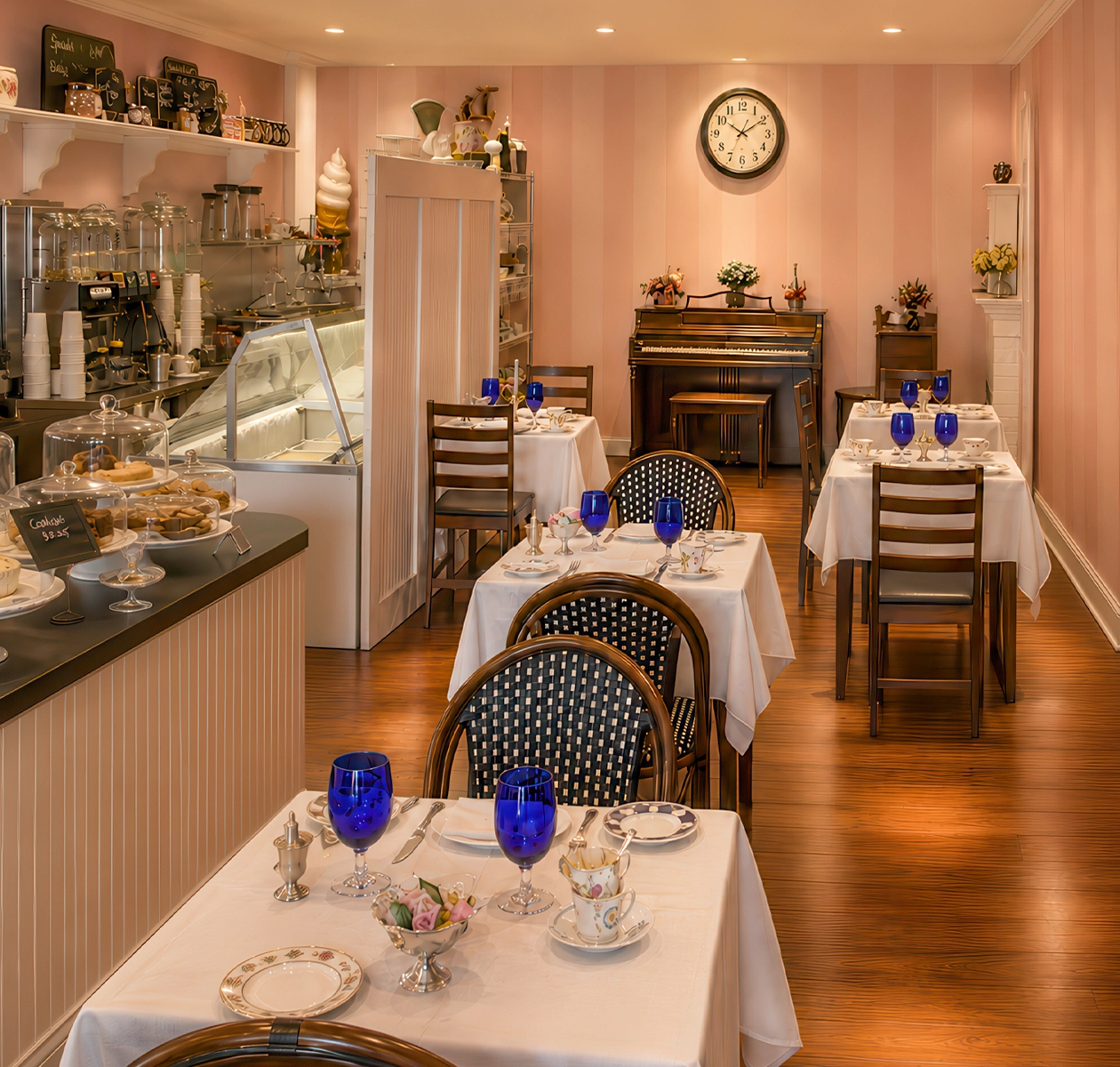
Built, owned, and operated over fourteen years.
Full-service restaurant design and spatial configuration.
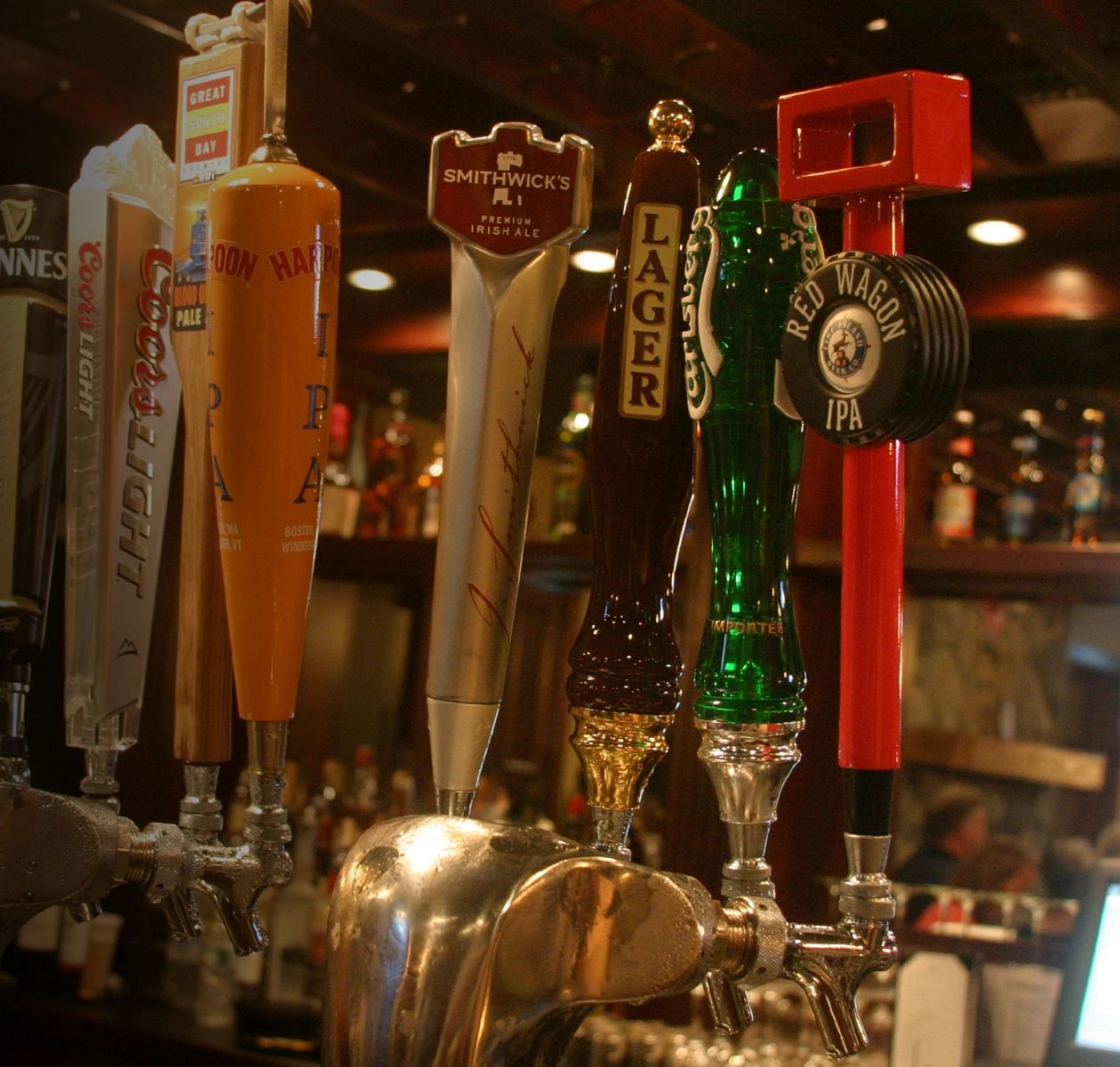
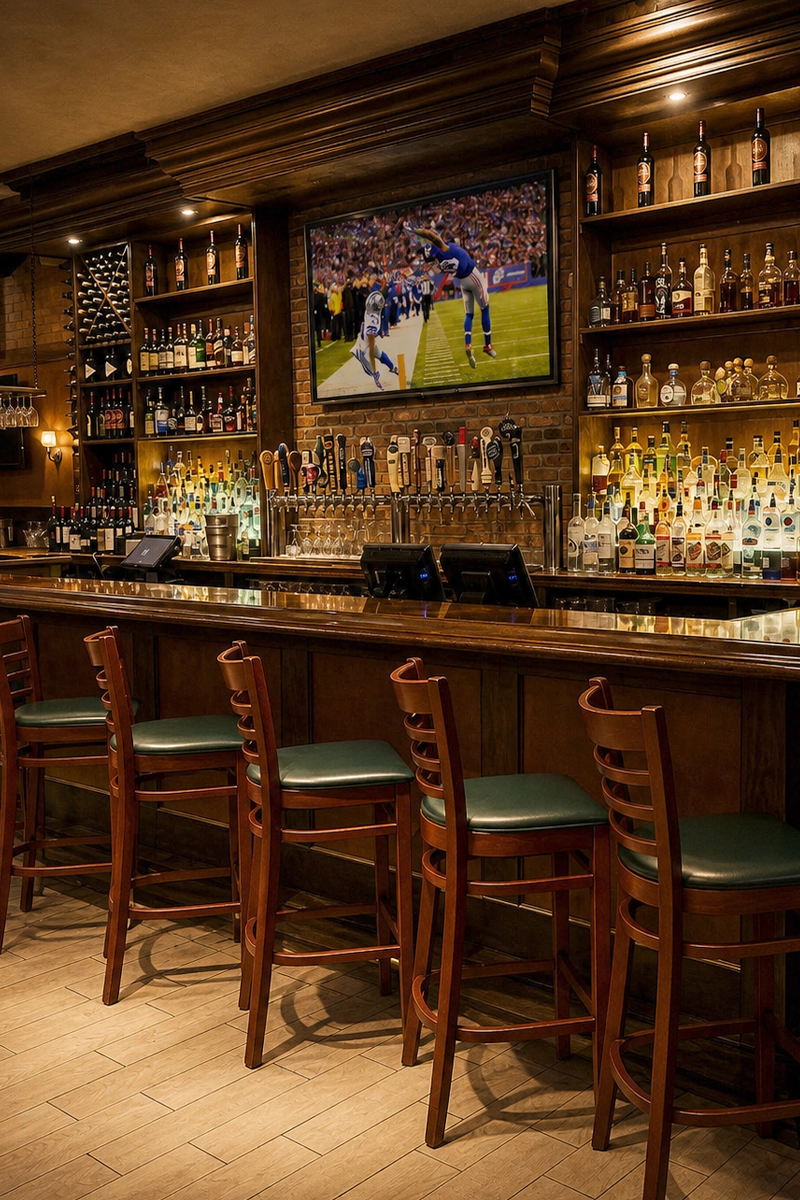
Bar design, opening consultation, and website development.
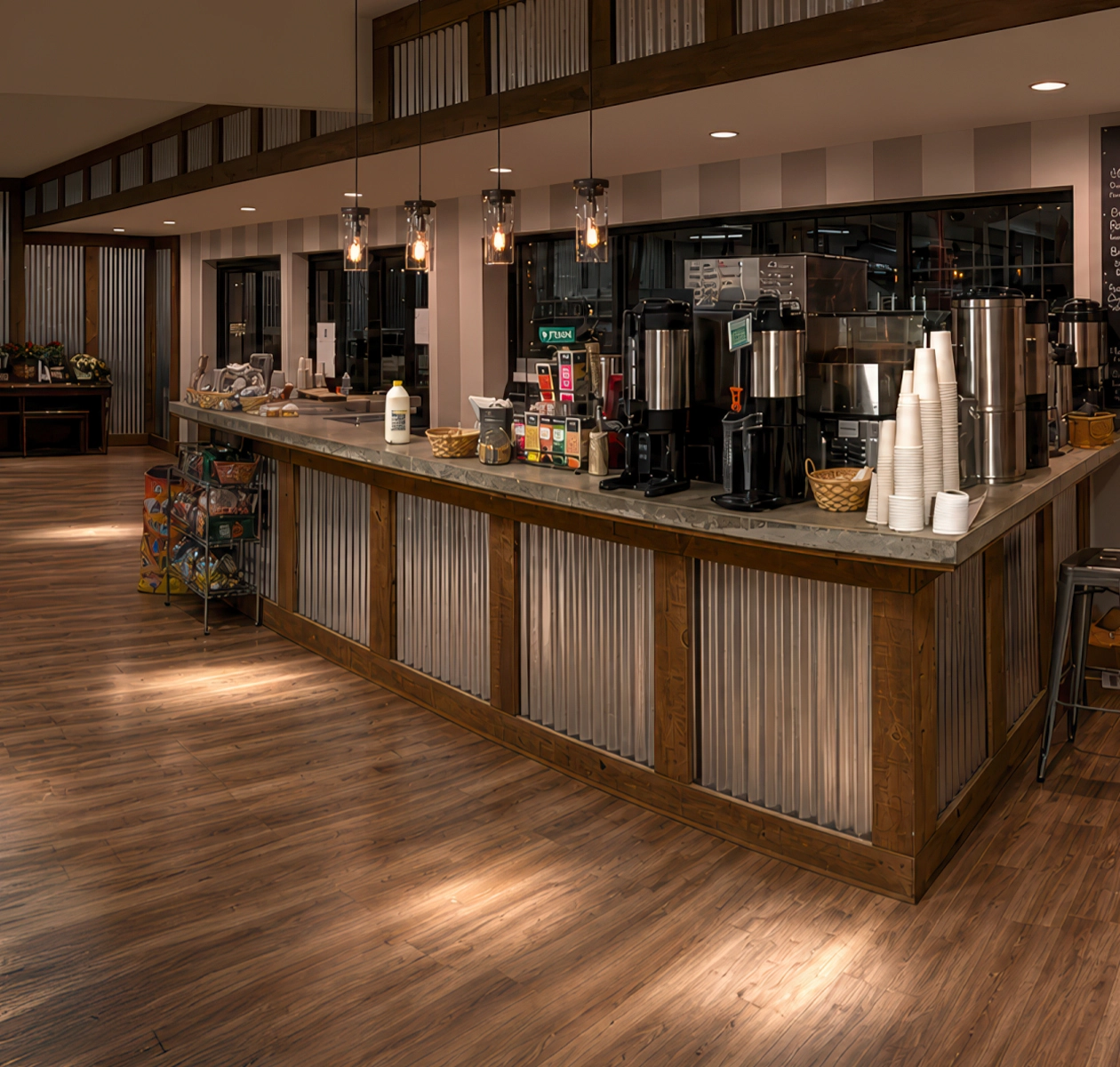
Designed, rebuilt, and owned, as a community market.

Early in his hospitality career, he was fortunate to pass through a New York dining world that was still formal, well-mannered, and old-world, shaped by defining chefs and restaurateurs of the period — He worked under Waldy Malouf at the Rainbow Room, Pierre Schaedelin at Le Cirque, Charlie Palmer at Aureole, Gérard Pangaud at Aurora, and Wayne Nish at March.
Those rooms taught him that hospitality was never only service. It was timing, restraint, proportion, and the ability to make a room feel as if it had been waiting for the people who entered it.
That understanding extended into ownership. Over fourteen years, Skipperdee’s was built, owned, and operated in Point Lookout, New York. From modest beginnings, it grew into a familiar local gathering place, an “old fashioned” space with “retro decor” that “brings you back to a better… time.” It became part of the local rhythm, voted Best Ice Cream Shop on Long Island in 2017 and 2018.
It was not simply a business. It was a place—a constructed social environment where people gathered, stayed, and returned over and over again.
That work expanded into the design of full-service restaurant environments, including the interiors and exteriors of Brixx & Barley in Long Beach, New York, where the spatial configuration of the room—its scale, flow, and density—was created as a social environment, later described by a critic as “cavernous and cacophonous,” and into consulting through the opening of additional hospitality projects, including bar design, pre- and opening-phase consultation, and website development for Heneghan's Tavern , where a New York Times critic described the bar as “a handsome, dark wood snug bar with brass rails and fine mosaic detail.”
It continued in the design, rebuilding, and operation of The Food Mill in the same town, carried forward over a five-year period, restoring a structure first established in 1930 and described as a “comfortable, friendly, and relaxing environment” and a local “social center.”
The work was no longer observation alone.
It was the shaping of social environments—and the responsibility that goes along with it.
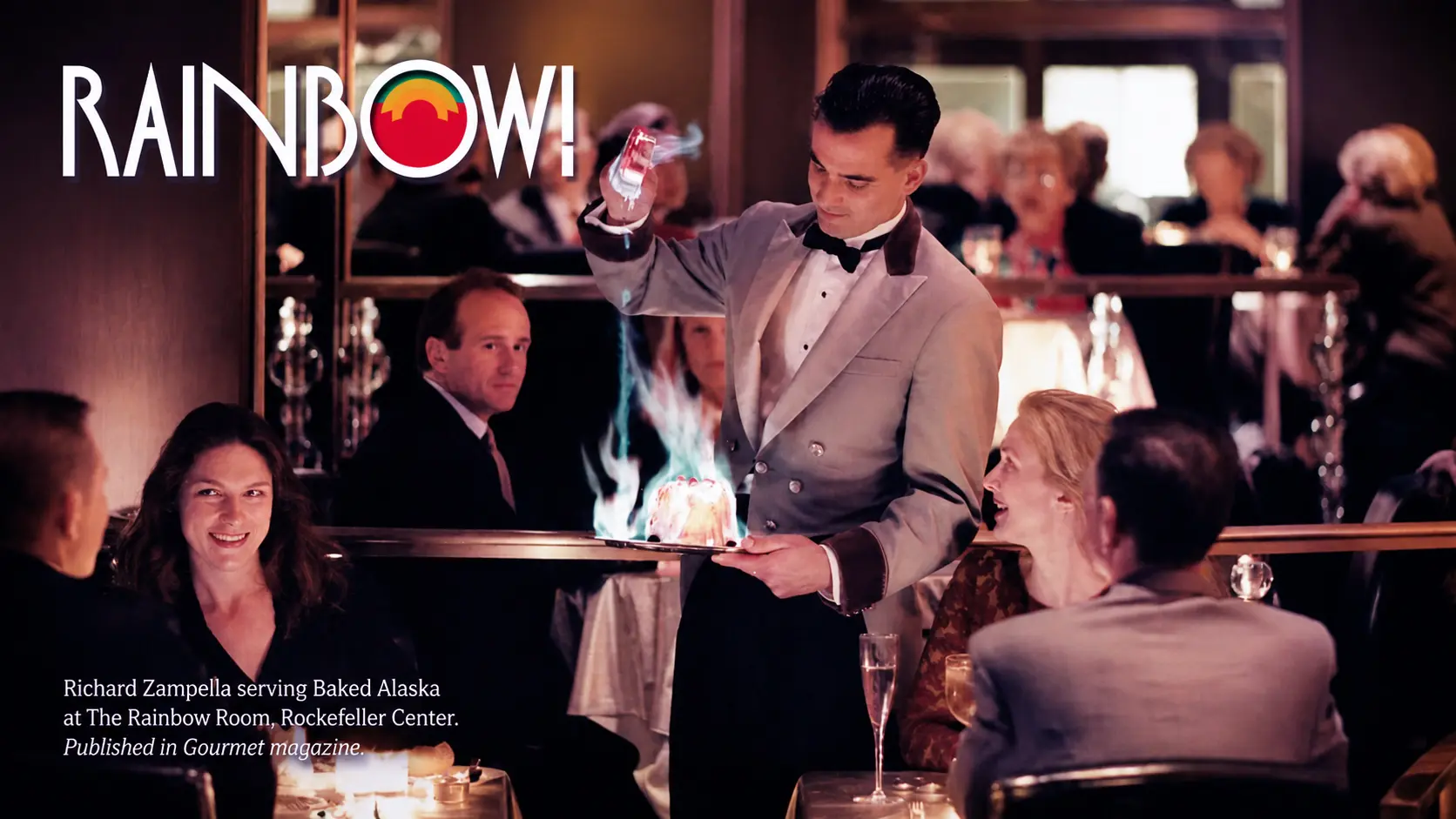
Richard Zampella serving Baked Alaska
Sixty-Five Floors High Above Rockefeller Center at The Rainbow Room.
Published in Gourmet magazine.
For seventeen years at the Rainbow Room, night after night, hospitality meant learning timing, attention, and performance inside a room designed to be remembered.
Published in Gourmet magazine, this image shows Richard Zampella serving Baked Alaska at the Rainbow Room in Rockefeller Center, within the world shaped by Joe Baum — a world where service, movement, scale, and memory were all part of the design. Over many hours of conversation, Baum became a mentor, helping him understand that a room was never accidental. It was built from proportion, sequence, instinct, and the way people moved through it.
Through Baum, that way of seeing eventually led to architect Hugh Hardy, who brought those ideas back to Idylease through site plans, spatial configurations, and design studies. What began in a legendary New York room became a way of thinking about buildings, memory, and how a place like Idylease might live again.

Documentary Work in American Cultural History.
The hospitality work moved outward into film. What had been shaped in the great dining rooms of New York shifted into observation. It became documentary work in American life—producing and editing, returning those moments through film and television.
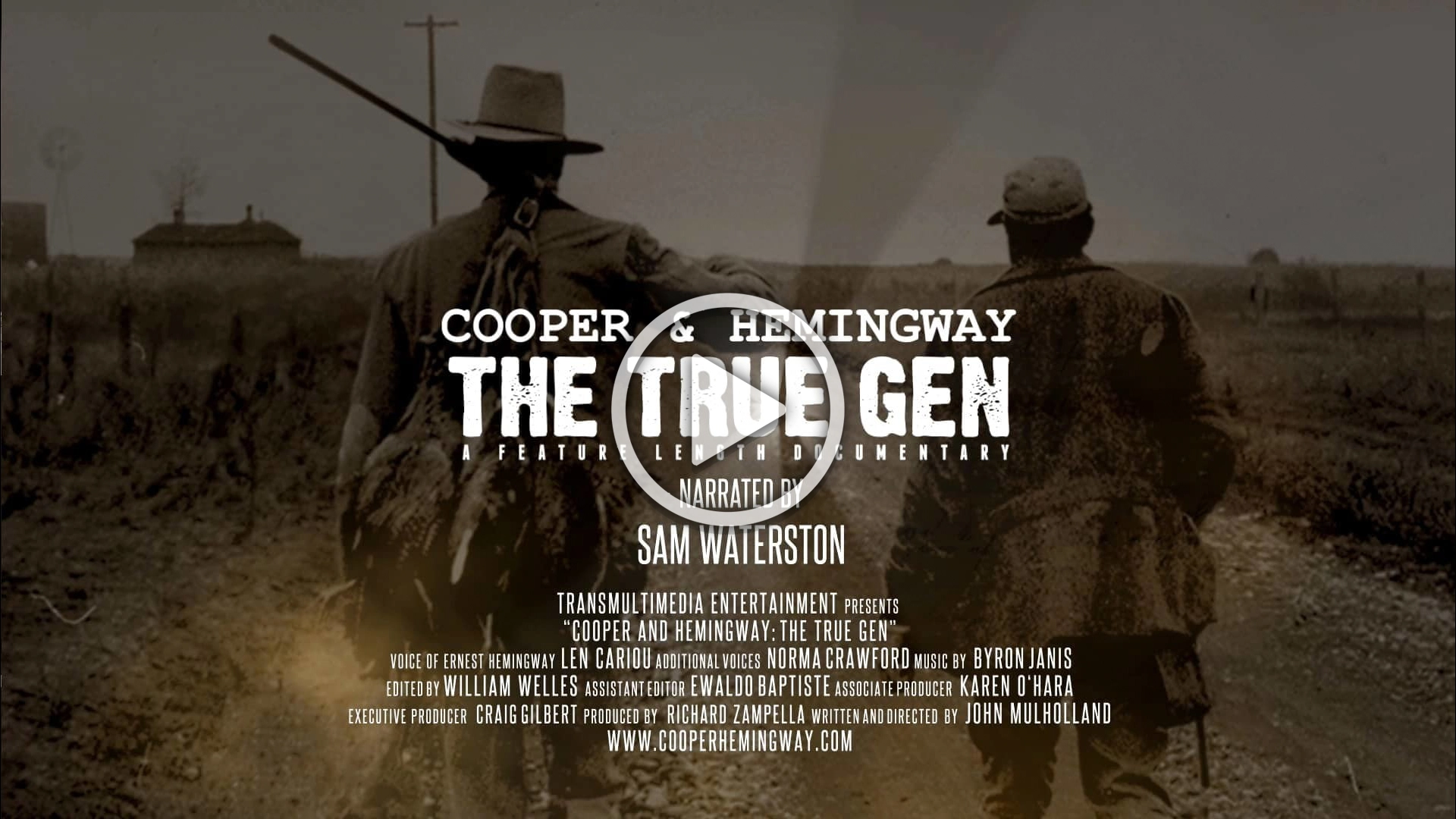
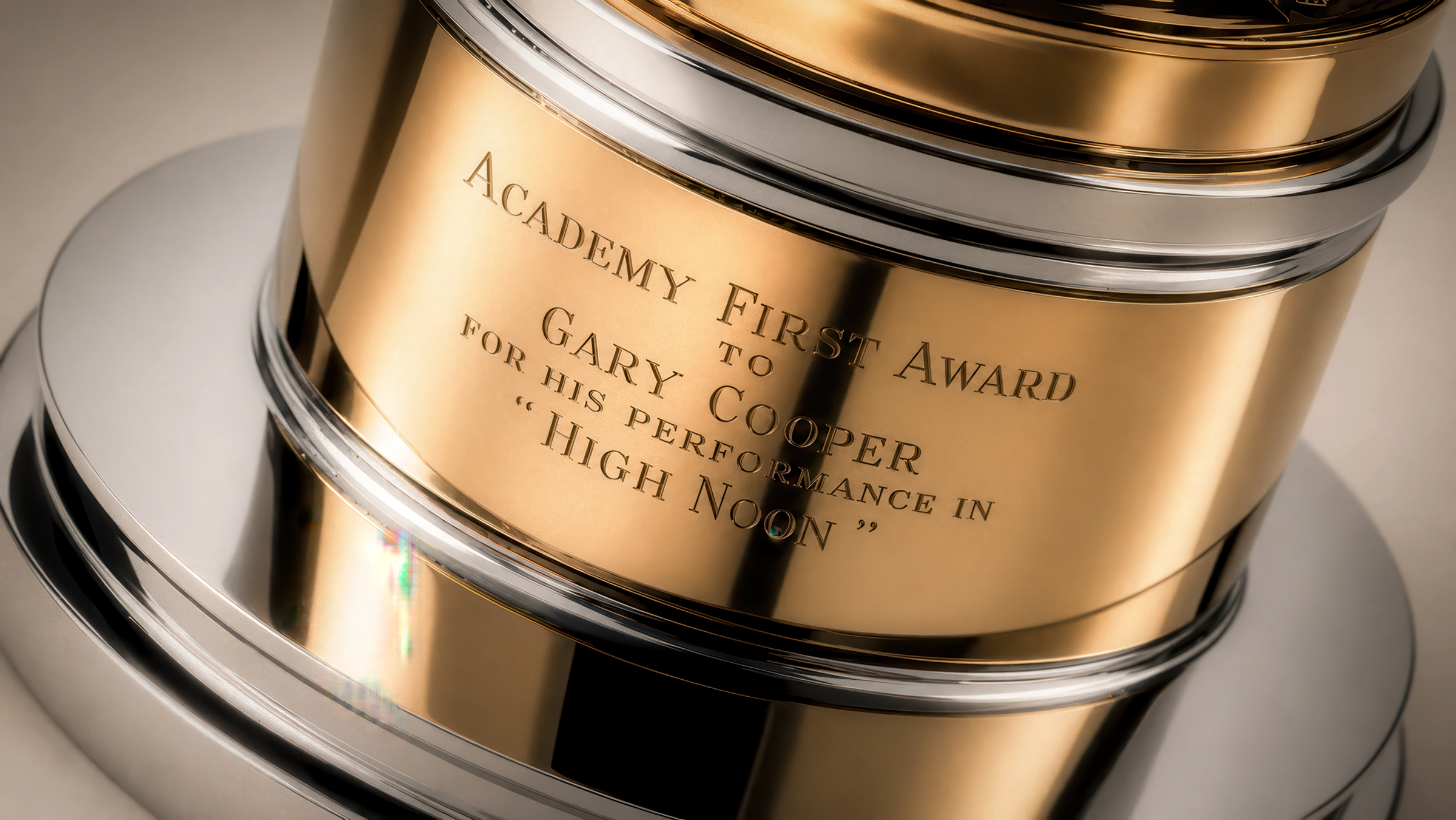
Cooper & Hemingway: The True Gen marked a turning point. Named a New York Times Critics’ Pick, the film was recognized for demonstrating how the work and values of its subjects continue to endure over time. As Andy Webster observed, it was proof that:
"The work of these two men endures—and so does what they stood for.”
Years in Hospitality
Nielsen Ratings
Awards
Broadcast Distribution
Projects developed over time
Stories observed and shaped, carried across mediums—into film, image, and what was built from them.





Produced, edited, and shot on 35mm film, this Idylease concept film was created as an early attempt to make the idea visible for the property before it had a finished plan. It imagined Idylease in motion — arrival, landscape, rooms, leisure, dining, memory, and return. For more than twenty years, the film was never publicly seen. Its value now is not promotional, but evidentiary: before Idylease could be explained to architects, investors, or engineers, it had already begun to exist in a visual world.
As Creative Director of Transmultimedia Entertainment , Richard Zampella oversees the development and execution of documentary and media projects from concept through completion. The work extends beyond storytelling into structure—how material is gathered, interpreted, and ultimately presented. Projects are shaped over time through research, editing, and production, with attention given to both the subject and the form it takes. The emphasis remains on clarity and restraint, allowing the material to endure.
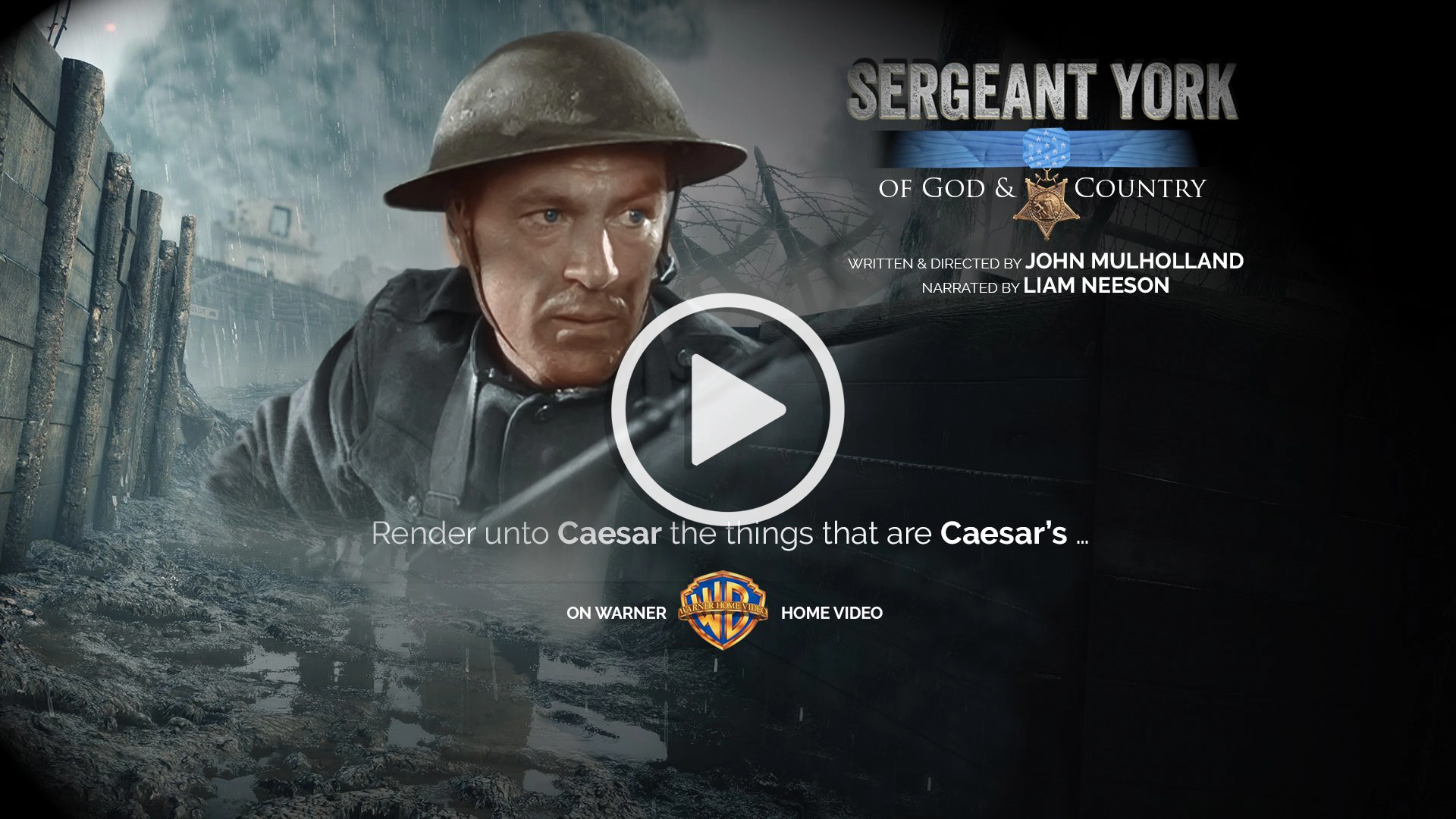
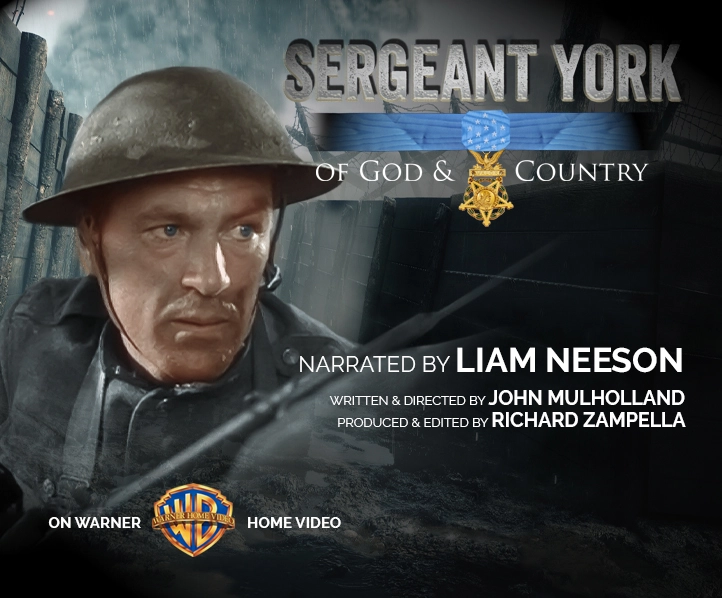
Sergeant York: Of God and Country, produced for Warner Home Video and narrated by Liam Neeson, examines the life of Alvin C. York as both lived experience and cultural narrative. The film considers how his story—formed in the context of the First World War—was later interpreted and preserved through American film and popular memory. In tracing that movement from history to representation, the documentary reflects on how individual lives become part of a broader cultural record.
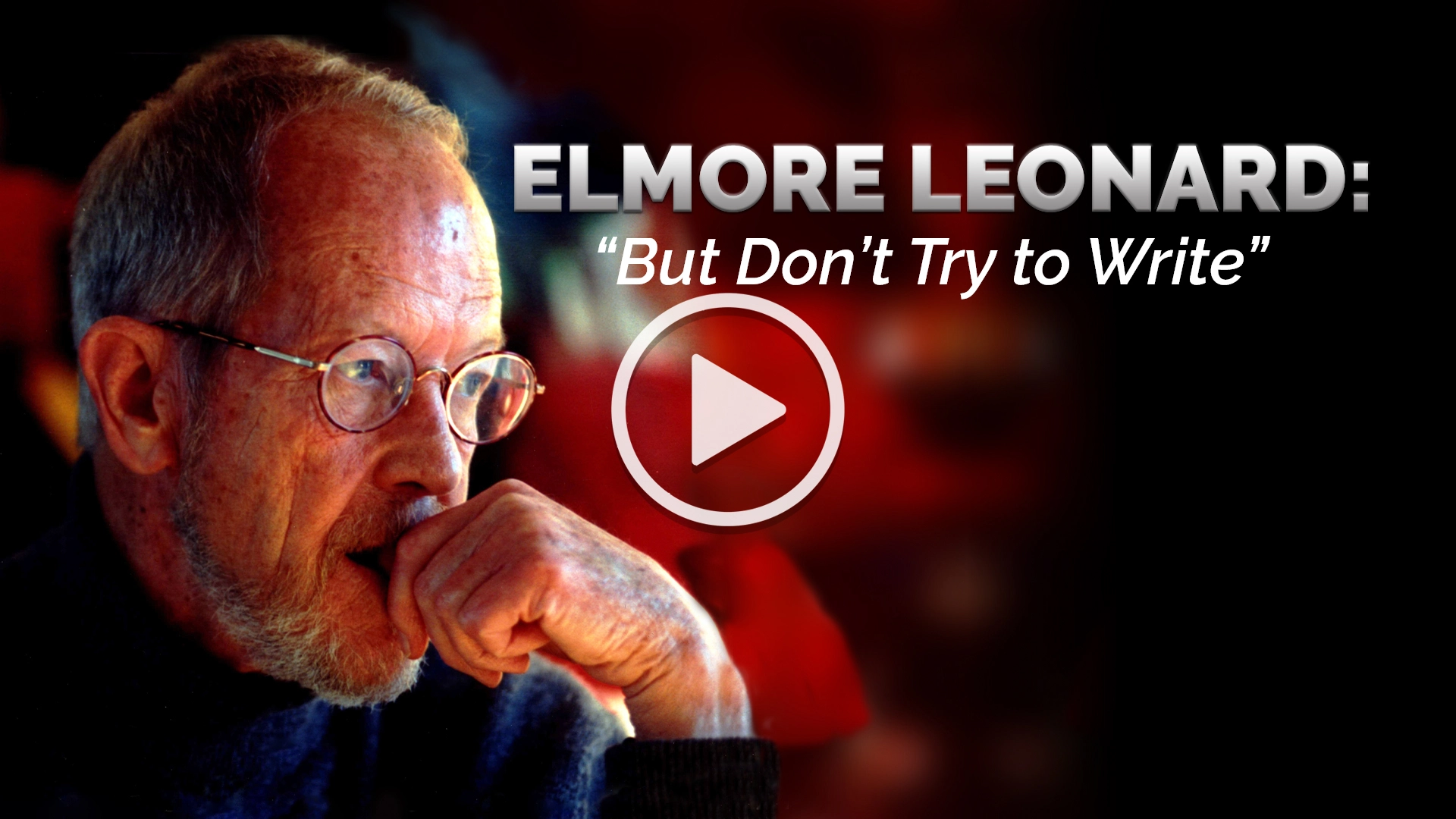
Elmore Leonard: “But Don’t Try to Write”, distributed nationally by American Public Television and narrated by Campbell Scott, examines the work of a writer known for precision and restraint. Aired internationally on PBS America and Sky TV in the United Kingdom, the film considers how Leonard’s style—defined as much by what was omitted as what was written—carried across novels, film, and television. It is a study in voice, structure, and the discipline of leaving things unsaid.
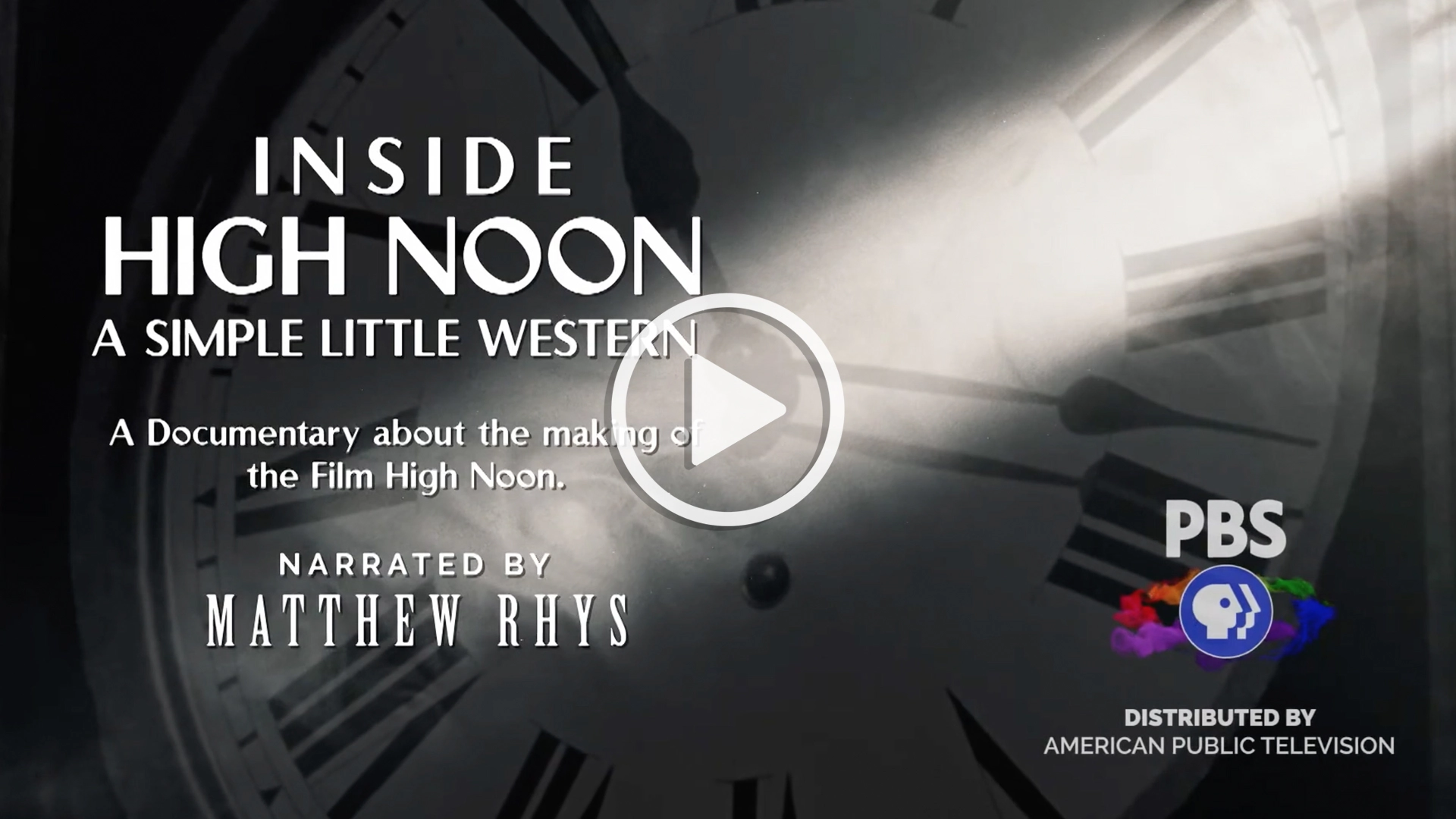
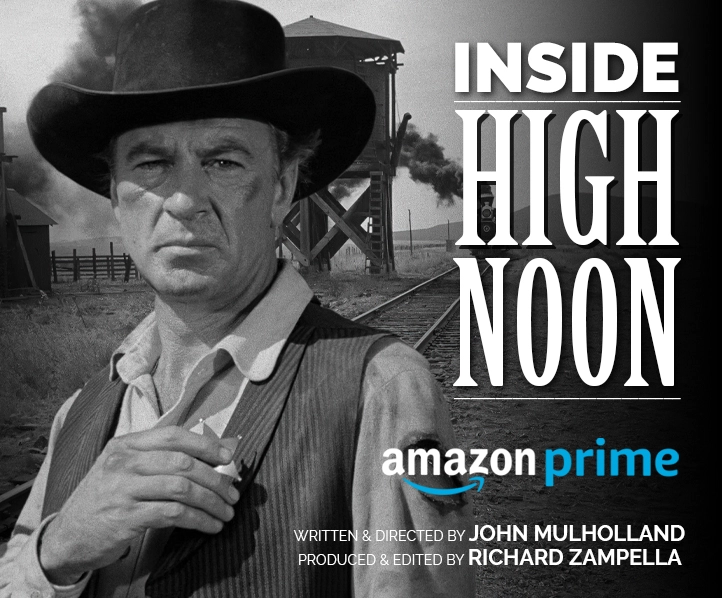
Distributed nationally by American Public Television and aired on PBS and PBS America, Inside High Noon, narrated by Matthew Rhys, examines a landmark of classic American cinema within the political climate in which it was made. The documentary looks at the film’s production during the era of the Hollywood blacklist and the investigations of the House Un-American Activities Committee (HUAC), when key members of the production—including screenwriter Carl Foreman—were under pressure or blacklisted. It considers how the film’s themes of isolation, moral conviction, and public responsibility were shaped by those conditions, and how that meaning has endured within the broader history of American film.
From concept through completion, the work is shaped by research, editorial judgment, and visual restraint. Each project begins with ideas that need to be discovered, questioned, arranged, and given form. Cinematography is used not simply to illustrate a subject, but to create atmosphere, rhythm, and continuity—allowing archival material, landscapes, symbolic objects, and moving images to belong to one visual language. The writing follows the same discipline, giving structure without overexplaining and letting the subject remain at the center. Across the work, the process moves from research to edited film sequence, until the finished project becomes a record of attention.
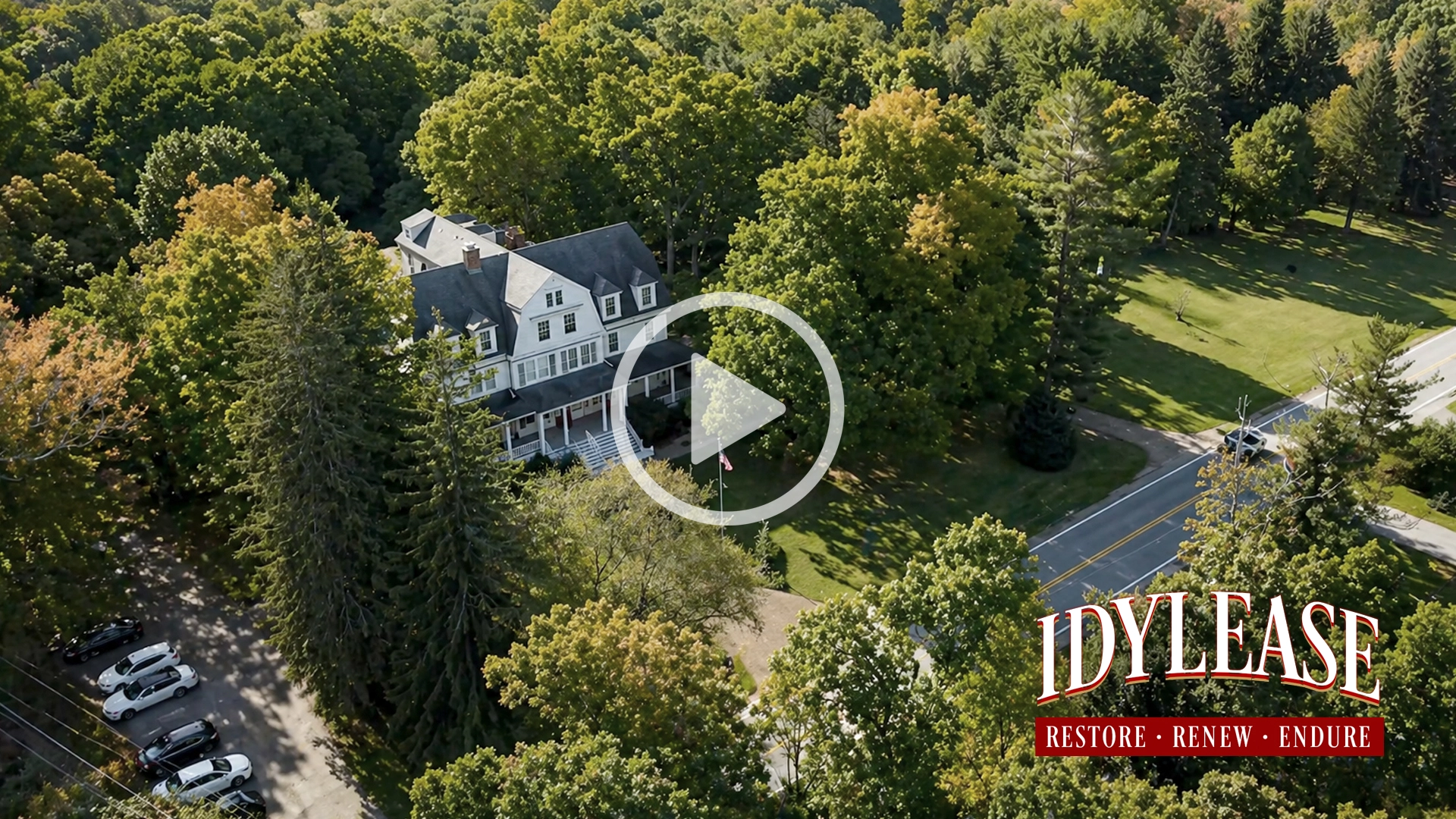
Drone photography was used to give Idylease a wider sense of memory and scale. The image begins close to the architecture of Idylease, then moves outward through roofline, trees, lawn, and sky until the building is held within the larger Highlands landscape. The drone is not used for spectacle, but for distance, atmosphere, and continuity — allowing the house and the land around it to enter the same visual language. Across the sequence, the camera moves from nearness to elevation, letting the viewer feel the quiet relationship between structure, landscape, and time.
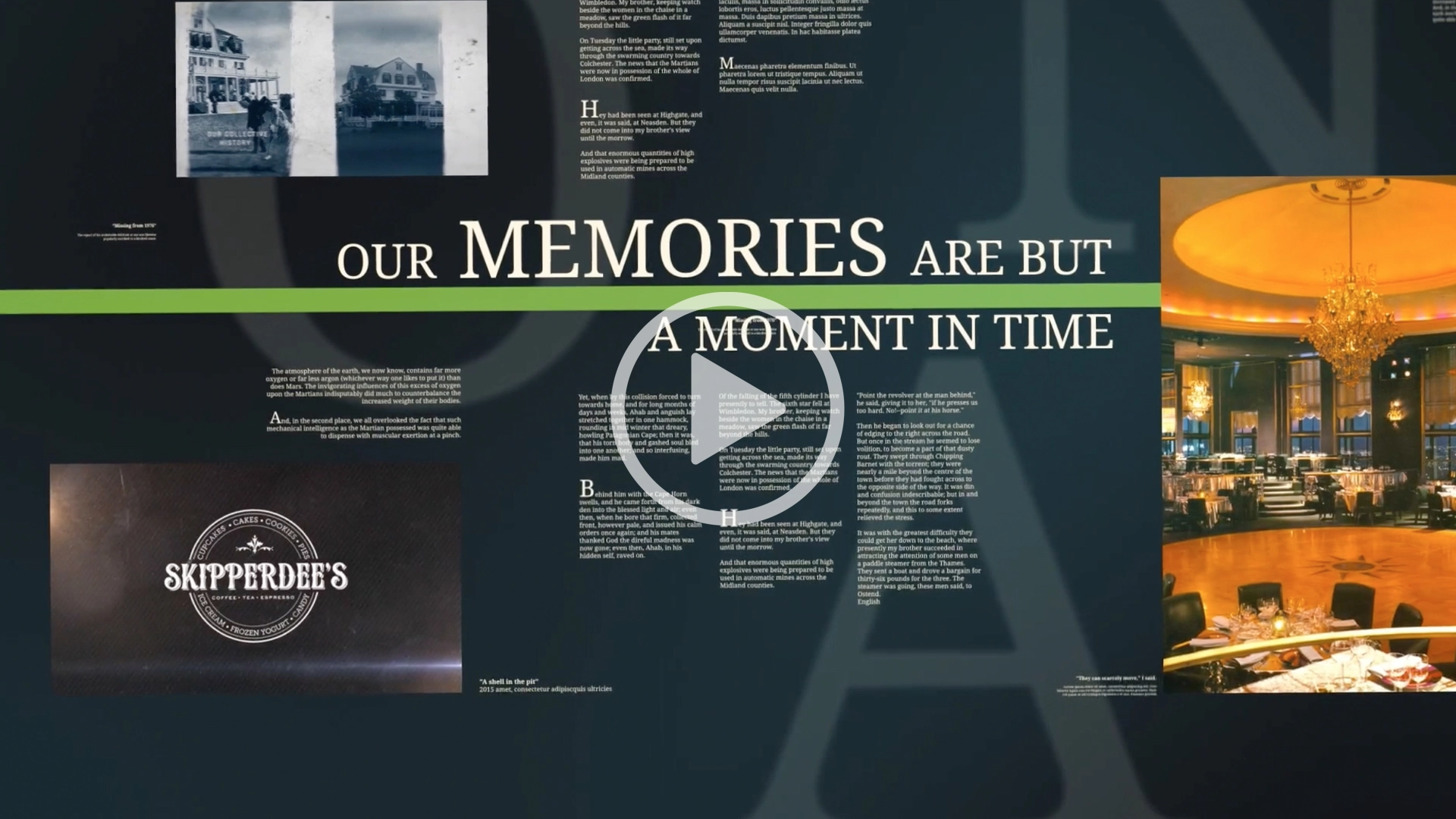
Motion graphics are utilized in bringing still material into rhythm and motion. Archival photographs, titles, documents, film stills, and graphic elements are arranged into a moving visual field, allowing research and image to unfold together. The work depends on restraint and editorial judgment — using typography, scale, and movement to connect separate fragments into a single visual language. Across the sequence, motion becomes a form of structure, guiding the viewer from idea to image to memory.
Drawn from film and the work at Idylease.
"Inside High Noon from Transmultimedia Entertainment is an excellent 56-minute examination of the film’s production history, cultural legacy and political subtext."
Los Angeles, California
"Cooper & Hemingway: The True Gen is proof that the work of these two men endures and so does what they stood for."
A New York Times Critics' Pick
"Sergeant York: Of God and Country" is expertly narrated by Liam Neeson with absorbing and touching reminiscences from Joan Leslie and June Lockhart about their experiences making the film."
Blu-ray Review
“Richard Zampella has done a beautiful job in renovating and preserving Idylease… When you care about something and put your heart and life into it like he does, that’s what you get: something very special.”
West Milford Resident
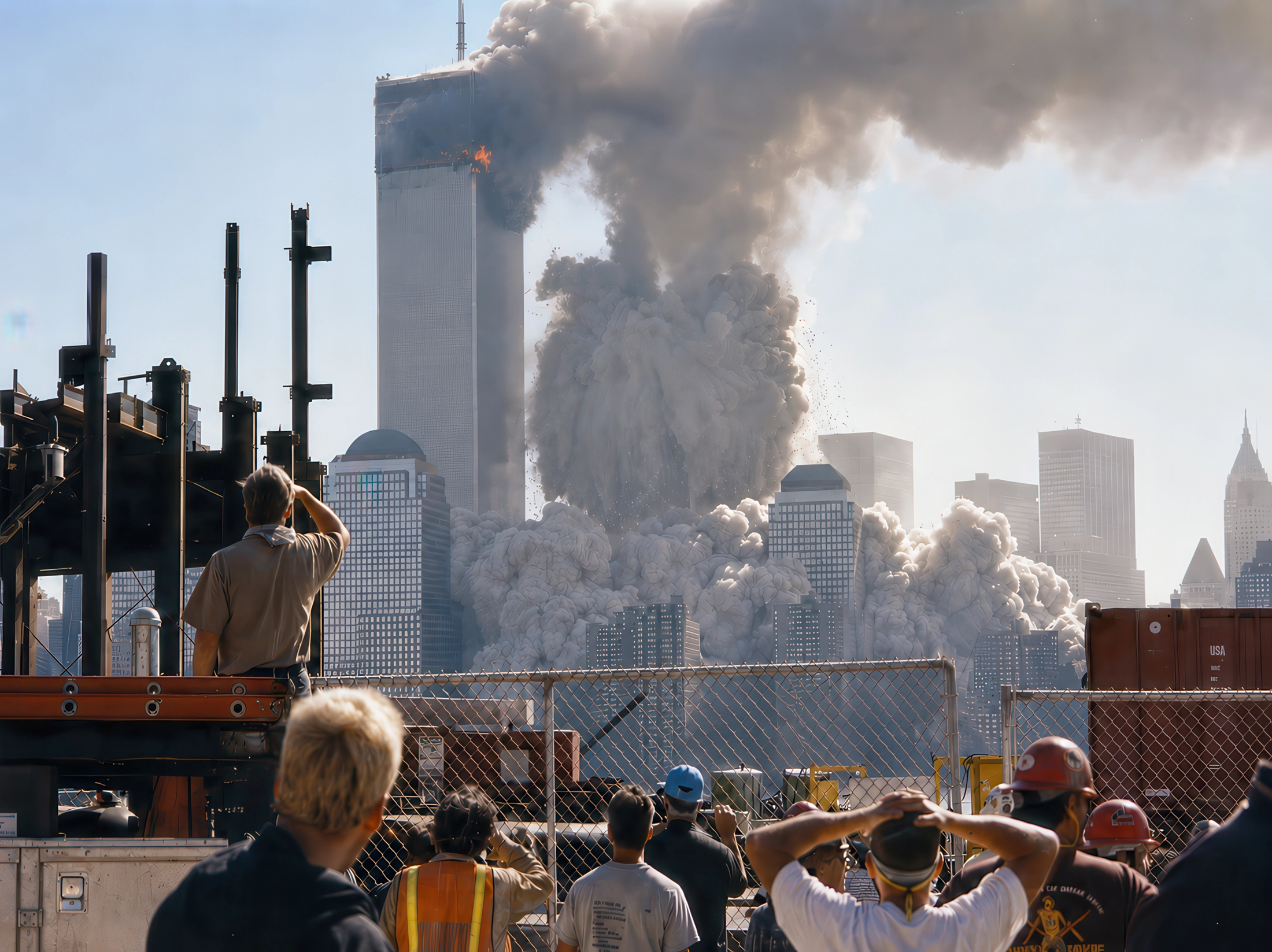
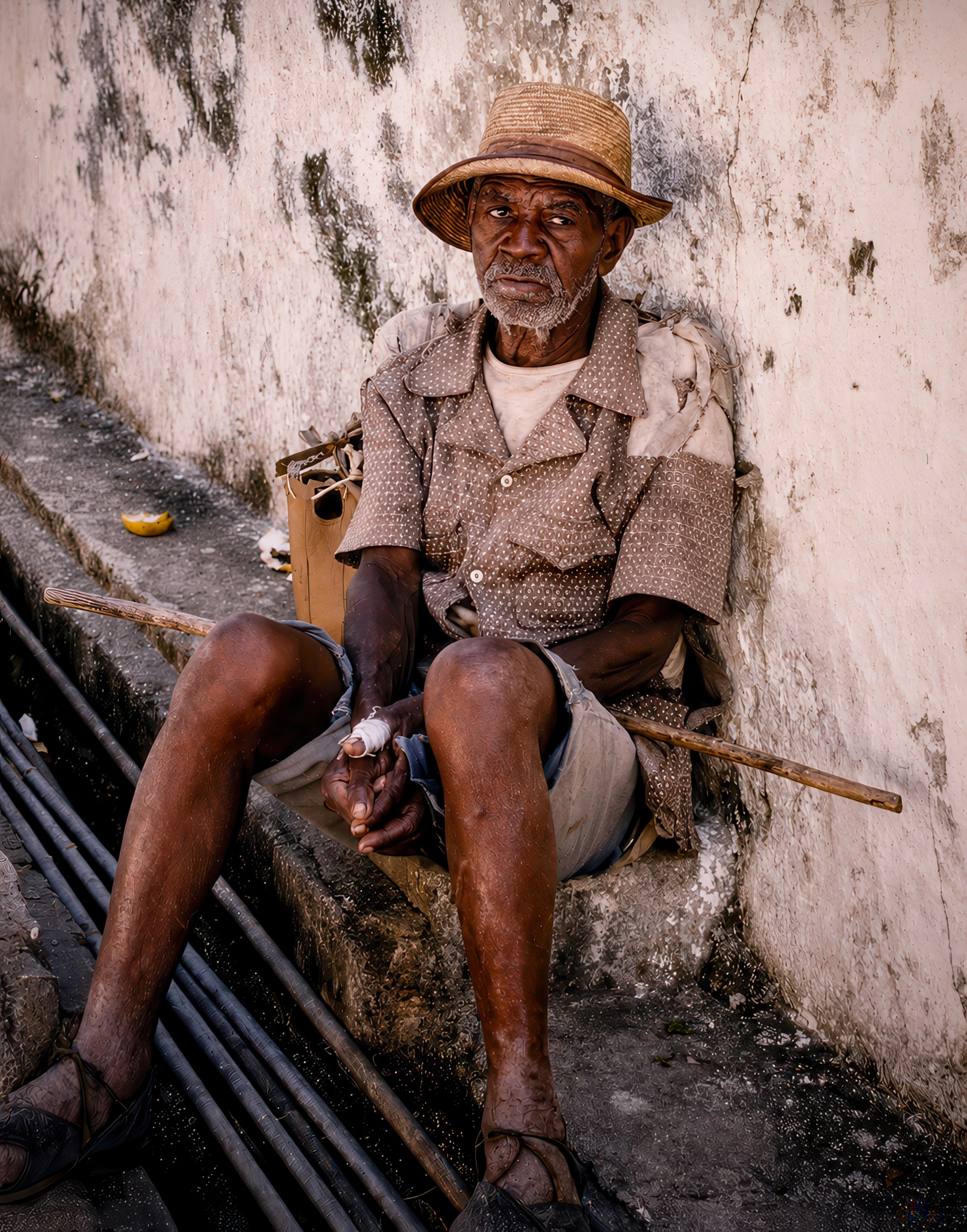
Photography became a way of documenting time — carrying observation forward through documentary work, design, advertising, motion graphics, and the record of people, places, objects, and moments that might otherwise have been left to memory alone.
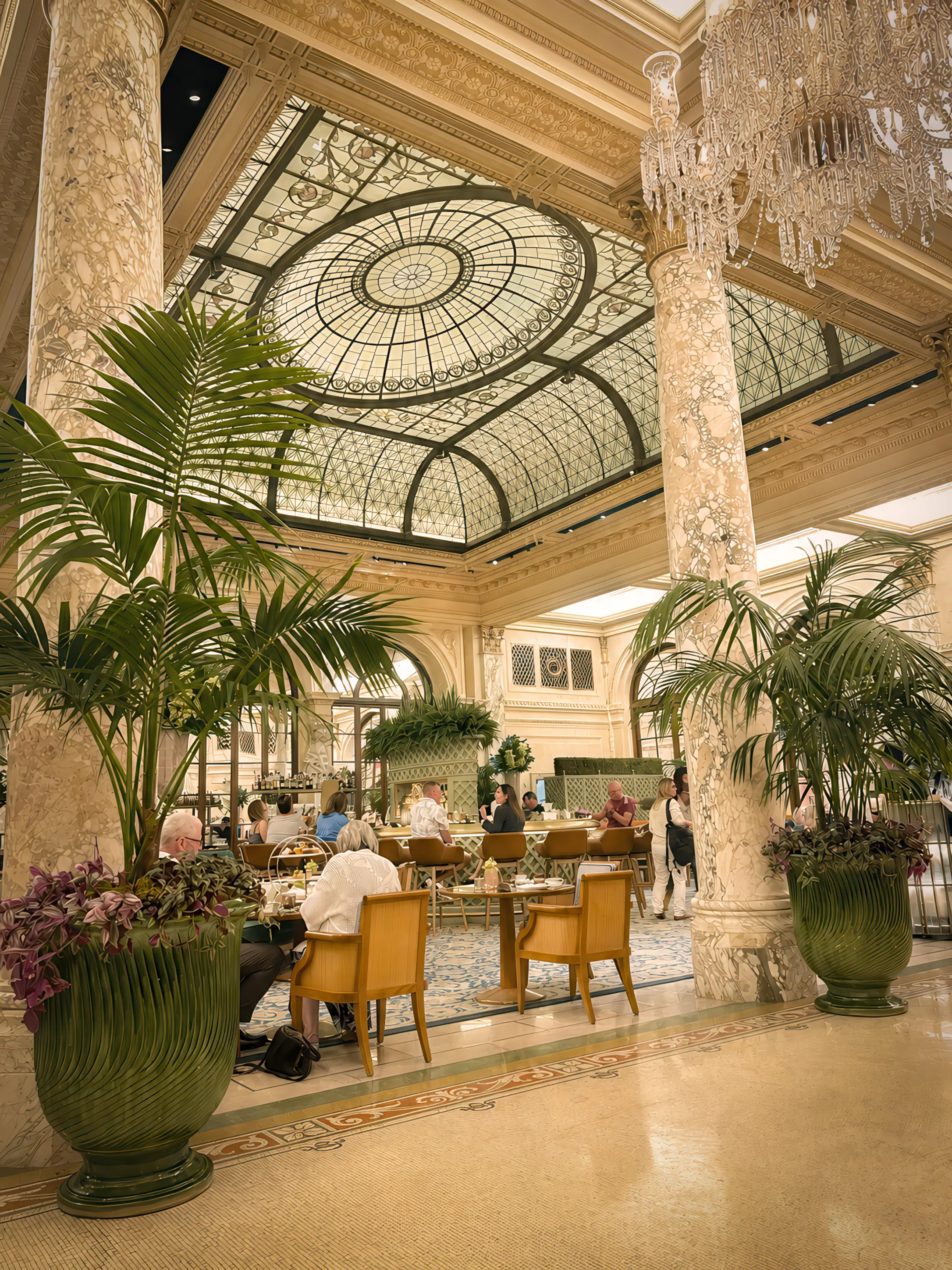
These images pass through restaurants, hotel lobbies, documentary work, travel, historic interiors, and portraiture. They were made across different periods of my life and work, often before I understood what they had been keeping. The photograph from September 11 remained undeveloped in my camera for years, unseen until I was able to return to it; later, it entered public view through CNN and reached international audiences. Others remained quieter, preserving the intimate evidence of lived experience: afternoon tea at Skipperdee’s, rooms prepared for use, objects that made history physical, and faces held briefly in time.


124 Union Valley Road
Newfoundland, NJ 07435
+1 973-557-7572
Phone Us
M-F: 9 AM - 5 PM
Sa: 8 AM - 12 PM


In The Highlands Region of New Jersey
www.idylease.org