Memory / Essay / September 13, 2026
We Have to Go
A memory of my father, a little girl, an afternoon in April 1972, and how I learned her name 54 years later.
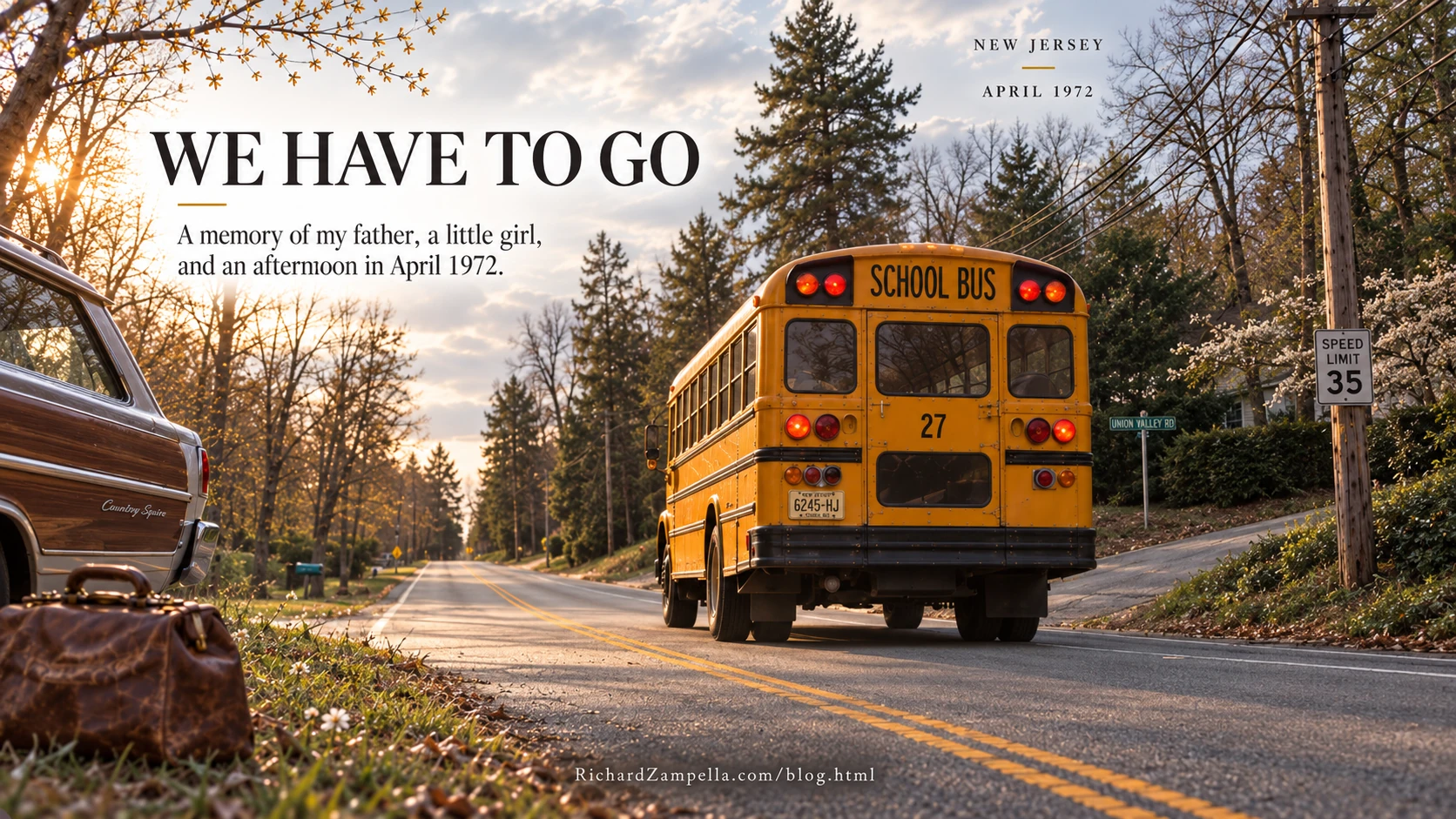
The telephone rang in the kitchen at the house. My father answered it. I was six years old, and by then I had already learned that there were different kinds of telephone calls. Most were ordinary. Someone wanted to speak to him. A patient had a question. Something had happened that could wait.
Then there were the other calls.
Something changed in the way he listened.
This was one of those.
He stood with the receiver to his ear and said very little.
“I understand.”
He hung up the telephone and looked at me.
“We have to go.”
He sent me to the hall closet for his medical bag.
I knew exactly where it was.
I went down the hall, opened the closet and lifted it from its place. The bag always seemed heavy to me.
I carried it outside to his Country Squire station wagon. The chrome hubcaps reflected the afternoon sun as I walked toward the car.
I climbed in with the bag.
I do not remember much about the ride that afternoon.
I remember arriving.
Officer Bob Sutter was standing in the road. He recognized my father’s station wagon and walked over to the driver’s-side window.
He leaned in and spoke to my father in hushed tones.
I could not hear what he said.
Then he stepped back and waved us through.
Union Valley Road was crowded with police cars, ambulances and fire engines. A yellow school bus was still sitting on the slight incline, its engine running.
Police radios crackled along the roadside. Car doors opened and shut. People moved through the scene with grave expressions on their faces.
Somewhere ahead of us a woman was wailing.
You could hear her before you reached her.
The bus driver sat on the curb with a police officer beside her. She was crying uncontrollably.
Then I saw the blood-stained canvas tarp.
It covered a little girl except for the lower part of her legs.
She wore white tights and white patent-leather shoes.
My father stopped.
He looked at me.
“Are you okay?”
“I’m alright.”
I looked at him.
“Are you okay?”
He did not answer.
We kept walking.
Her cries carried across the road above the idling bus and the mechanical whir of the rotating police lights.
My father nodded to one of the police officers.
The officer reached down and lifted the stiff canvas tarp.
Droplets from the inside of the cover struck the asphalt and stood out against the dark pavement.
I watched my father’s shoulders stiffen.
That is one of the things I remember most clearly.
He knelt beside the little girl.
I was holding his medical bag.
By then I knew enough about being with my father while he worked to stay quiet and stay out of the way.
He reached for the bag and I handed it to him.
He opened it, removed his stethoscope and placed it against her small chest.
Then he looked at his gold Tissot watch.
“4:10,” he said.
I stood beside him.
There was nothing I could do for the girl. There was nothing he could do for her either.
But I could hold the heavy bag.
Afterward my father reached into it again and began removing the injectables he carried with him. They were for the girl’s mother and the bus driver.
One of the police officers took me off to the side.
From there I watched my father at a distance.
I could still hear the mother. I could see my father moving between her and the driver, but I was not close enough to hear what he said or see what he did.
I just watched.
The next morning I went back to Paradise Knoll School.
The teachers told us what had happened the afternoon before.
They were emphatic.
Under no circumstances were we ever to go beneath a school bus. If something fell underneath it, leave it there. If something blew beneath it, leave it. Get an adult.
They repeated the warning several times.
Never go beneath the bus.
I remember thinking it was odd.
I had been there the afternoon before.
No one else in the classroom had.
That was when I learned what had happened before my father and I arrived.
The little girl had gotten off the yellow school bus carrying a crayon drawing she had made at school.
The wind took it from her hands.
The drawing blew behind the bus, near the dual rear tires.
She went after it.
Her mother was waiting for her some distance away.
When the little girl disappeared behind the bus, her mother could no longer see her.
The bus was stopped on a slight incline.
Before the driver pressed the accelerator, it rolled backward.
Her mother was already running toward her.
By the time she reached her daughter, it was too late.
The teachers repeated the warning.
Never go beneath the bus.
I already knew.
My father and I had a camaraderie built from shared experiences.
There would be many more calls over the years. More times than I care to remember, I found myself beside him somewhere I would rather not have been.
My father believed that one day I would become a doctor like him.
For most of my childhood, I believed it too.
I watched him work. I knew his instruments. I knew his medical bag. I knew when to hand something to him and when to stand quietly beside him.
The expectation followed me all the way to college.
My life went in another direction.
If my father was disappointed, he never expressed it.
For more than fifty years I remembered that afternoon without knowing the little girl’s name.
While working on this book, I decided to see if I could find a newspaper account of what had happened.
I did not know if I would find one.
I searched.
Nothing.
I changed the words and searched again.
Still nothing.
After several attempts, I began to wonder whether the accident had ever been reported.
Then I found it.
A newspaper from April 1972.
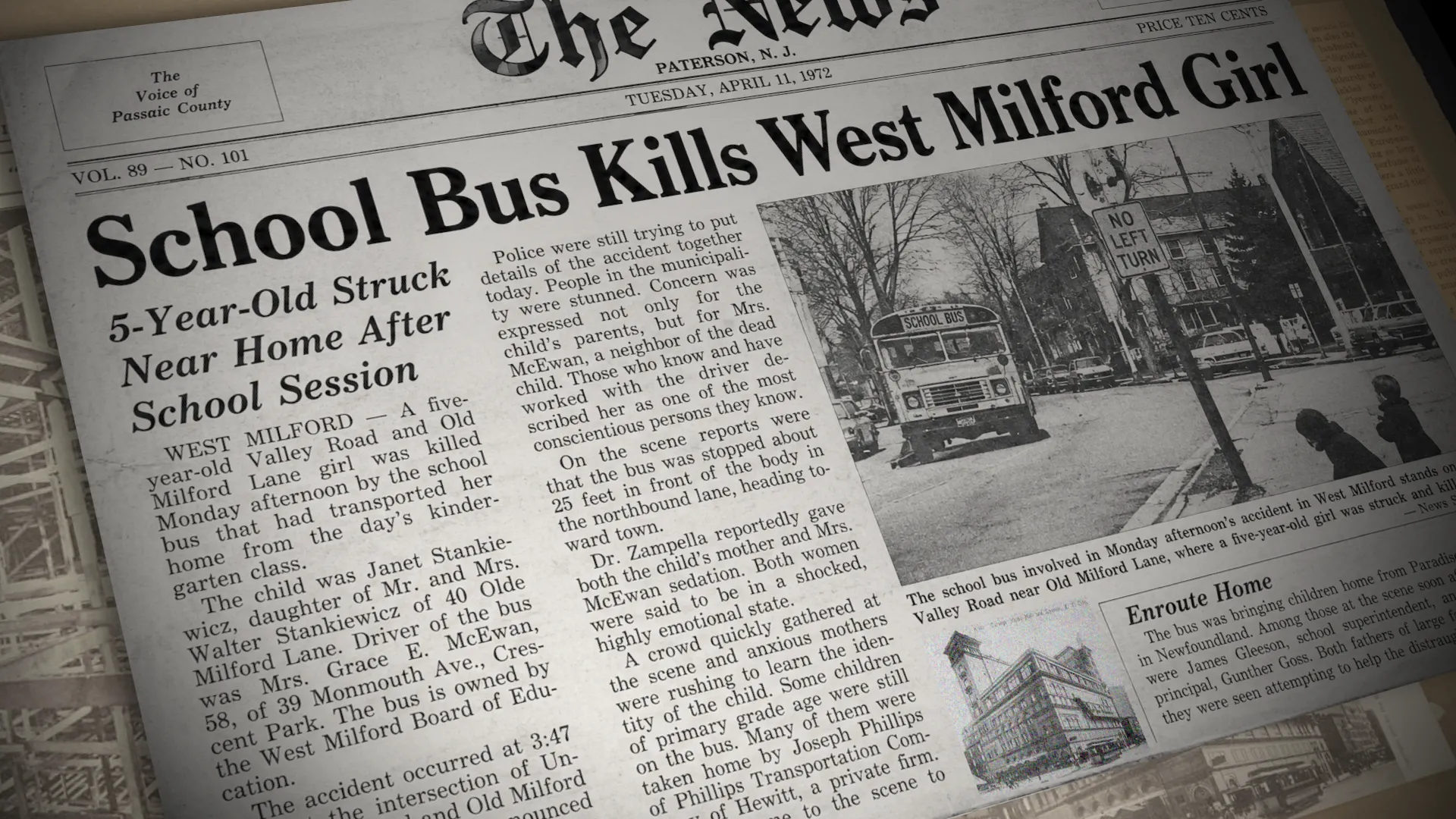
There was my father’s name.
Dr. Arthur Zampella of Newfoundland.
And there was hers.
Janet Stankiewicz.
She was five years old.
I was six.
We attended Paradise Knoll School.
I did not know her.
I sat looking at her name.
A newspaper article placed the accident at 3:47 that afternoon at Union Valley Road and Old Milford Lane. A later report said my father arrived within minutes.
The paper also recorded that after Janet was pronounced dead, he remained at the scene and attended to her mother and the bus driver.
I had watched that part from a distance.
Looking back, I think the police officer understood that neither woman needed another child almost exactly Janet’s age standing there.
I still have the gold Tissot watch my father looked at when he gave the time.
I still drive that stretch of Union Valley Road.
Not every time I pass it, but often enough, I remember.
Sometimes I think about Janet’s family and how unbearable that day must have been for them.
The incline is still there.
What I remember next is the ride home.
It was quiet.
The rides home after things like that were always quiet.
But this one felt different.
It had been a child.
A little girl almost my own age.
I sat beside my father as we drove.
We were nearly home when we approached the driveway at Idylease.
My father slowed the Country Squire.
I assumed he was going to turn in.
He looked at me.
“How about ice cream?”
He kept going.
We went to Dairy Queen and ordered hot fudge sundaes.
My father and I sat together in the warm spring sun and ate our ice cream.
I do not remember what we talked about.
When we finished, we got back into the Country Squire.
We drove home.
This time, when we reached Idylease, my father turned into the driveway.
